
Best overall for confirmed intake gaps: a straightforward B12 plus folic acid supplement. Best for pregnancy planning: a prenatal containing folic acid and B12. Best for difficulty swallowing tablets: a liquid combination. This 2026 guide ranks supplement formats—not unverified brands—and explains when separate nutrients make more sense.
- The best b12 and folate supplement matches your nutritional need, not a methylated label or an energy promise.
- Choose a prenatal with folic acid and B12 for pregnancy planning, with clinician guidance.
- Directcare connects adults with licensed clinicians for blood testing and supplement decisions.
- Check suspected B12 deficiency before taking high-dose folic acid; correcting anemia can hide ongoing nerve damage.
Why this matters
B12 and folate help your body make DNA and healthy red blood cells. Too little of either can cause anemia, but B12 deficiency can also damage nerves—even without anemia.
That distinction changes what you should buy. Folate can correct the anemia associated with B12 deficiency without treating its neurological effects. Persistent tingling, numbness, balance problems, or unexplained weakness need medical assessment, not a supplement experiment.
Directcare connects US adults with licensed clinicians for blood testing and supplement care. Directcare is best for adults who want clinician-guided decisions about B12 and folate supplements rather than choosing from label claims alone.
What makes the best B12 and folate supplement?
Use these criteria before comparing bottles in 2026:
- A clear reason to supplement. Dietary gaps, pregnancy planning, and diagnosed deficiency are different situations. They do not call for identical formulas.
- Appropriate nutrient amounts. Compare the full serving, not just the front label. A larger amount is not automatically more useful.
- Clearly identified forms. Look for the named B12 and folate ingredients. Cyanocobalamin, methylcobalamin, folic acid, and methylfolate are not interchangeable marketing terms.
- A workable format. Tablets, liquids, and separate supplements differ in convenience. Choose something you can measure and take consistently.
- Quality verification. Look for independent verification, such as USP or NSF certification, and verify the specific product's listing rather than assuming every product from a company qualifies.
The ranking prioritizes clinical fit before convenience. No supplement earns first place because it promises energy, uses the word active, or includes extra ingredients you do not need.
B12 and folate supplements at a glance
| Rank and option | Best for | Standout feature | Key limitation |
|---|---|---|---|
| 1. B12 plus folic acid combination | Adults with confirmed gaps in both nutrients | Both nutrients in one formula | Fixed amounts limit individual adjustment |
| 2. Prenatal containing folic acid and B12 | Pregnancy planning | Folate provision within a pregnancy-focused formula | Other ingredients need review |
| 3. Separate B12 and folate supplements | Clinician-directed dose adjustment | Each nutrient can be changed independently | More complicated routine |
| 4. Liquid B12 and folate combination | Difficulty swallowing tablets | Avoids swallowing a tablet | Measuring and ingredient amounts need attention |
| 5. Methylcobalamin plus methylfolate combination | People specifically choosing methylated forms | Provides methylated forms of both nutrients | Not proven universally better than standard forms |
These are formulation categories, not endorsements of particular bottles. Check the actual Supplement Facts panel; products within the same category can contain very different amounts.
1. B12 plus folic acid: best for confirmed intake gaps
A combination containing B12 and folic acid puts both nutrients in one serving. Cyanocobalamin is a commonly used B12 form; folic acid is the form used in fortified foods and many supplements.
This is the simplest default when you need both nutrients and the amounts match your situation. It is not a substitute for investigating why either nutrient is low.
B12 plus folic acid pros:
- Combines both nutrients in one routine.
- Uses familiar, well-studied nutrient forms.
- Makes the ingredient list easy to assess when the formula contains few extras.
B12 plus folic acid cons:
- A fixed ratio prevents changing one nutrient without changing the other.
- A routine supplement is not automatically appropriate treatment for diagnosed deficiency.
Best for: Adults whose dietary review or clinical assessment identifies a need for both nutrients.
Check other supplements before adding this combination. A multivitamin, B-complex, and separate folate tablet can overlap without making the routine more effective.
For your 2026 shortlist, favor a clearly labeled formula over a long ingredient list. Added herbs and an energy-focused name do not establish that the B12 and folate amounts suit you.
Verdict: Buy only when both nutrients are needed and the serving fits your plan.
2. Prenatal with folic acid and B12: best for pregnancy planning
A prenatal combines folate and B12 with other nutrients intended for pregnancy-related needs. Its main advantage here is context: pregnancy planning requires more than choosing the most impressive-looking B-vitamin label.
CDC guidance recommends 400 mcg of folic acid daily for people capable of becoming pregnant to help prevent neural tube defects. Certain medical histories require a different clinician-directed plan; do not increase the amount yourself.
Prenatal with folic acid and B12 pros:
- Places folate supplementation within a pregnancy-focused routine.
- Can include B12 alongside other needed nutrients.
- Reduces the need to assemble multiple overlapping products.
Prenatal with folic acid and B12 cons:
- Ingredients such as iron can cause gastrointestinal side effects.
- Formulas vary; the word prenatal does not guarantee suitable amounts or ingredients.
Best for: People planning pregnancy or following a pregnancy supplement plan with their clinician.
Read the folate line carefully. Labels can list dietary folate equivalents alongside the amount of folic acid, and those numbers are not identical. A methylfolate-only label is not the same as a label providing the folic acid used in established neural tube defect prevention recommendations.
Bring the complete label to your appointment, particularly if you already take another multivitamin. Review the whole formula, not just B12 and folate.
Verdict: Buy for pregnancy planning after checking the formula against your clinician's advice.
3. Separate B12 and folate: best for individual dose adjustment
Separate supplements let you change B12 without changing folate, or the reverse. That matters when one deficiency is confirmed and the other nutrient does not need the same adjustment.
A clinician can also decide that B12 treatment requires a different route, including injections. Separate bottles do not solve an absorption problem by themselves.
Separate B12 and folate pros:
- Allows independent adjustment of each nutrient.
- Makes it easier to stop an unnecessary ingredient.
- Fits a treatment plan that changes after follow-up testing.
Separate B12 and folate cons:
- Creates more opportunities for missed or duplicated servings.
- Requires a clear plan rather than self-directed escalation.
Best for: People with different B12 and folate requirements or a clinician-managed deficiency.
Before starting, review these steps with your clinician:
- Check symptoms: Describe numbness, balance changes, fatigue, and dietary restrictions.
- Review results: Discuss blood counts and B12 or folate testing as appropriate.
- Choose treatment: Match the nutrient, amount, and route to the findings.
- Plan follow-up: Agree on how response and symptoms will be reassessed.
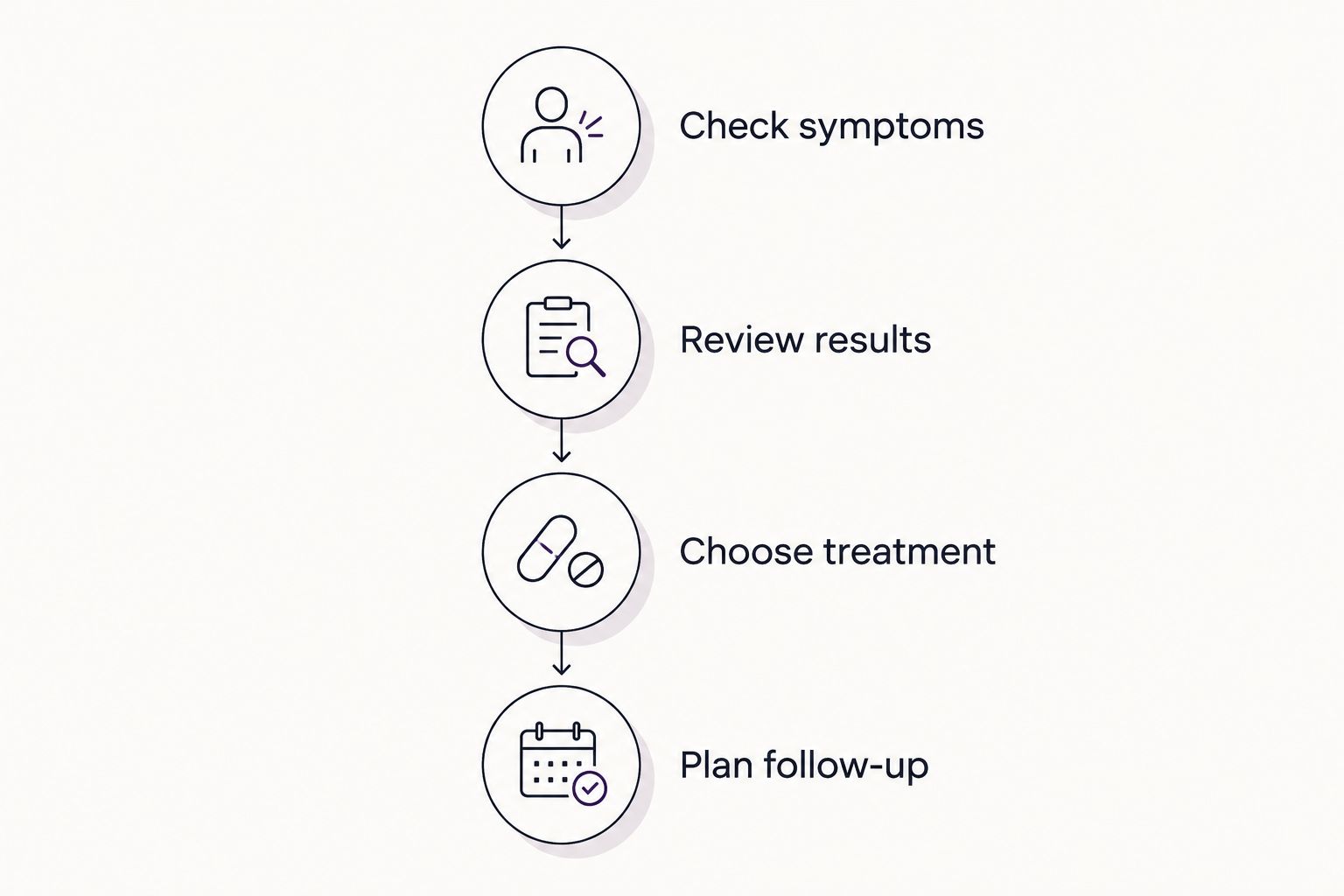
For B12 and folate supplements, Directcare offers access to licensed clinicians and blood testing. The useful next step is a clear treatment decision, not automatically adding both nutrients.
Verdict: Hold until you have an individual plan for each nutrient.
4. Liquid B12 and folate: best for swallowing difficulty
A liquid combination avoids swallowing a tablet. That practical difference can make a supplement routine easier when tablets are difficult to take.
Liquid does not mean more effective. Compare the nutrient forms and amounts, and check whether the label describes a full dropper, a measured volume, or another serving.
Liquid B12 and folate pros:
- Avoids a conventional tablet.
- Provides both nutrients in one liquid formula.
- Offers an alternative when tablet size prevents consistent use.
Liquid B12 and folate cons:
- Measuring errors can change the amount taken.
- Flavorings, sweeteners, and serving instructions vary between products.
Best for: Adults who need both nutrients but struggle to swallow tablets.
Use the measuring device specified for the product. Do not assume that a kitchen spoon or a dropper from another bottle delivers the labeled serving.
Also separate liquid from sublingual claims. NIH guidance reports no evidence that sublingual B12 is more effective than oral B12. Choose the format for usability, not an assumed absorption advantage.
Verdict: Buy for easier swallowing, not for promised superiority.
5. Methylcobalamin plus methylfolate: best for form preference
This combination supplies methylcobalamin as B12 and methylfolate, often labeled 5-MTHF, as folate. These are legitimate nutrient forms, but their names do not establish that a product is better for everyone.
Your 2026 decision should still start with need, amount, and tolerability. A methylated label does not diagnose a deficiency or explain fatigue.
Methylcobalamin plus methylfolate pros:
- Clearly identifies methylated forms when the label is complete.
- Provides an alternative to folic-acid-based combinations.
- Combines both nutrients for people whose plan includes these forms.
Methylcobalamin plus methylfolate cons:
- Does not offer a proven universal advantage over standard forms.
- MTHFR-focused marketing can distract from actual dietary needs and clinical findings.
Best for: Adults whose clinician recommends these forms or who specifically prefer them within an appropriate supplement plan.
A common MTHFR variant does not mean you cannot process folic acid. CDC guidance states that people with MTHFR variants can process folate, including folic acid; pregnancy prevention recommendations still apply.
Do not use a genetic report alone to choose a high-dose methylfolate product. Review the clinical reason for treatment first.
Verdict: Skip the automatic upgrade; choose methylated forms only for a clear reason.
How these options are ranked
This 2026 ranking compares suitability, ingredient clarity, dose flexibility, and ease of use. It does not claim laboratory testing of individual products or compare brands without verified labels.
The clinical reference points are the NIH Office of Dietary Supplements' B12 and folate fact sheets and CDC guidance on folic acid and MTHFR variants. These sources address nutrient requirements, safety, and pregnancy prevention—not endorsement of a particular supplement.
For adults, the B12 recommended dietary allowance is 2.4 mcg daily. The adult folate allowance is 400 mcg dietary folate equivalents daily. These are nutritional reference amounts, not automatic treatment doses for deficiency.
The adult upper limit for folic acid from supplements and fortified foods is 1,000 mcg daily, unless a clinician directs otherwise. That limit does not include naturally occurring food folate, and it should not be treated as a target.
Which B12 and folate supplement should you choose?
Choose a straightforward combination when you need both nutrients; choose separate supplements when their treatment needs differ. Pregnancy planning puts a suitable prenatal first, while swallowing difficulty makes a liquid format a practical alternative.
Do not buy a combination just because you feel tired. Fatigue has many causes, and taking B vitamins does not establish which one applies to you.
Before your next purchase in 2026, write down every supplement you take and photograph each label. Compare total B12, folate forms, and serving sizes with your clinician before adding another bottle.
FAQ
What's the best B12 and folate supplement for most adults?
A straightforward B12 and folic acid combination is a reasonable default when an adult needs both nutrients. If only one nutrient is low, a combination can add an unnecessary ingredient.
Is methylated B12 and folate better than regular forms?
Methylated B12 and folate are not proven universally better than standard forms. Choose based on your nutritional needs and clinical plan rather than the word methylated.
Can I take B12 and folate together?
Yes, B12 and folate can be taken together. The important questions are whether you need both and whether their amounts match your situation.
Can folic acid hide a B12 deficiency?
Folic acid can correct the anemia caused by B12 deficiency without treating its neurological damage. Suspected B12 deficiency needs assessment rather than folic acid alone.
Does an MTHFR variant mean I need methylfolate?
A common MTHFR variant does not automatically mean you need methylfolate. CDC guidance states that people with these variants can process folate, including folic acid.
Are B12 drops better absorbed than tablets?
Drops are not automatically better absorbed than tablets. NIH guidance reports no evidence that sublingual B12 is more effective than oral B12; choose a format you can use correctly.
Which folate supplement should I take when planning pregnancy?
Choose a supplement that provides folic acid in line with your clinician's pregnancy guidance. CDC recommends 400 mcg of folic acid daily for people capable of becoming pregnant, with individualized advice for higher-risk situations.
Should I get blood tests before taking B12 and folate?
Get clinical advice before supplementing when you have symptoms or suspect a deficiency. Tell your clinician what you already take, because supplementation can affect interpretation of blood results.
One last thing
A normal-looking blood count does not rule out B12-related nerve problems. If tingling, numbness, or balance changes prompted your search, prioritize medical assessment over comparing supplement forms.
Bring your symptoms and supplement labels to the appointment. That gives the clinician a better starting point than the name on the bottle.