
Best overall for a protein shortfall: protein powder. Best for constipation support: psyllium fiber. Best for confirmed deficiencies: the specific nutrient your clinician recommends. The best supplements for GLP-1 weight loss in 2026 address a defined nutritional need; they do not replace prescribed treatment or make it work better by default.
- The best supplements for GLP-1 weight loss address protein shortfalls, constipation, or confirmed nutrient deficiencies.
- Protein powder helps fill a dietary gap; it does not independently prevent muscle loss.
- Psyllium supports fiber intake, but severe abdominal symptoms need medical assessment rather than more fiber.
- Directcare connects US patients with licensed clinicians for GLP-1 weight-loss care and blood lab testing.
Why this matters
GLP-1 medications reduce appetite, which can make eating enough protein and maintaining a varied diet harder. Nausea, vomiting, diarrhea, and constipation can also complicate eating and drinking. A supplement should address the problem you actually have—not every possible problem on a shopping list.
Directcare connects US patients with licensed clinicians for prescribed weight-loss care and blood lab testing. Directcare is a fit for US adults seeking clinician-guided GLP-1 weight-loss care.
This 2026 guide ranks supplement categories by their role in supporting nutrition and managing specific dietary gaps. It does not rank branded products or claim that adding supplements produces greater weight loss.
What makes the best GLP-1 support supplement?
Use these criteria before choosing anything:
- Clear purpose: Identify a protein shortfall, low fiber intake, restricted diet, or confirmed deficiency.
- Relevant evidence: Separate evidence for correcting a deficiency from claims about accelerating weight loss.
- Tolerability: Consider nausea, fullness, constipation, and diarrhea before adding another product.
- Appropriate dose: Account for food, fortified drinks, and other supplements to avoid duplication.
- Medication fit: Ask a pharmacist about timing and interactions, especially with fiber and mineral supplements.
- Quality checks: Prefer transparent ingredient amounts and independent verification when available; certification does not prove effectiveness.
A long ingredient list is not an advantage. Your 2026 supplement plan should be easy to explain: what each product addresses, how you will judge its usefulness, and when you will reassess it.
GLP-1 support supplements at a glance
The order below prioritizes common dietary support needs before supplements that require a specific indication. It is not a recommendation to take every category.
| Rank | Supplement category | Best for | Standout role | Key limitation |
|---|---|---|---|---|
| 1 | Protein powder | Inadequate dietary protein | Adds protein without requiring another full meal | Does not replace resistance exercise or a balanced diet |
| 2 | Psyllium fiber | Low fiber intake with uncomplicated constipation | Provides soluble, gel-forming fiber | Can worsen bloating; unsuitable for suspected obstruction |
| 3 | Basic multivitamin | Persistently limited dietary variety | Covers several micronutrients in one product | Does not correct every deficiency or provide meaningful protein |
| 4 | Vitamin D | Documented deficiency or clinician-identified need | Supports normal bone and muscle function | Extra vitamin D is not a weight-loss treatment |
| 5 | Vitamin B12 | Confirmed deficiency or established risk factors | Supports normal nerve function and red blood cell formation | Not an energy or weight-loss treatment when levels are adequate |
| 6 | Oral rehydration solution | Fluid loss from vomiting or diarrhea | Replaces fluid and electrolytes | Not a substitute for evaluation of persistent symptoms |
1. Protein powder: best for a dietary protein shortfall
Protein powder is useful when smaller meals leave you short of protein. Whey, soy, and other formulations offer different ingredients and textures; choose according to dietary restrictions and tolerance rather than a weight-loss label.
The National Academies' adult protein recommended dietary allowance is 0.8 grams per kilogram of body weight per day for generally healthy adults. That is a reference allowance, not a personalized target for someone losing weight; age, activity, kidney health, and clinical circumstances affect the plan.
Protein powder pros:
- Adds protein when another full meal feels difficult.
- Lets you measure the amount you add to your diet.
- Offers an alternative when some protein-rich foods are unappealing.
Protein powder cons:
- Can cause gastrointestinal discomfort, depending on ingredients and tolerance.
- Cannot independently prevent muscle loss or replace food variety.
Best for: You consistently struggle to meet a clinician- or dietitian-set protein goal through meals.
Ask how protein fits alongside resistance exercise and adequate overall nutrition. Replacing every meal with a shake is a different decision from filling a specific gap.
Verdict: Buy if food intake leaves a genuine protein shortfall; skip it if meals already meet your needs.
2. Psyllium fiber: best for uncomplicated constipation support
Psyllium is a soluble fiber that absorbs water and forms a gel. It can support bowel regularity when low fiber intake contributes to constipation, but it is not the right response to every digestive symptom during GLP-1 treatment.
Start according to the product instructions and your clinician's advice, with the required fluid. Ask a pharmacist how to separate psyllium from oral medicines because it can affect their absorption.
Psyllium fiber pros:
- Adds fiber when your diet falls short.
- Can improve stool consistency and regularity.
- Offers a defined ingredient rather than a mixed digestive supplement.
Psyllium fiber cons:
- Can increase gas, bloating, or fullness.
- Requires adequate fluid and is unsuitable for people with swallowing difficulty or suspected bowel obstruction.
Best for: You have uncomplicated constipation and low fiber intake, without warning symptoms.
Do not keep increasing fiber if you develop severe abdominal pain, vomiting, marked swelling, or an inability to pass stool or gas. Those symptoms need prompt medical assessment.
Verdict: Buy for an appropriate constipation plan; skip self-treatment when symptoms suggest something more serious.
3. Basic multivitamin: best for persistently limited food variety
A basic multivitamin can help cover micronutrient gaps when your usual eating pattern becomes persistently narrow. It is a fallback for limited variety, not permission to ignore meals, protein, or ongoing nausea.
Choose a product suited to your circumstances rather than assuming a high-potency formula is better. Iron content, pregnancy potential, other supplements, and medication interactions all matter.
Basic multivitamin pros:
- Combines several micronutrients in one product.
- Can support intake while you work on improving dietary variety.
- Reduces the need to assemble separate supplements without a clear reason.
Basic multivitamin cons:
- Does not provide meaningful protein, fiber, or food energy.
- Can duplicate nutrients already present in fortified shakes or other products.
Best for: Your diet remains limited across multiple food groups, and a clinician or dietitian identifies a reason for broad support.
Bring the label to your appointment. Vitamin K matters with warfarin, and unnecessary iron can add gastrointestinal side effects.
Verdict: Hold until you review your diet and existing supplements; buy only if broad coverage serves a clear purpose.
4. Vitamin D: best for a documented deficiency or specific need
Vitamin D supports calcium absorption and normal bone and muscle function. Taking extra vitamin D is not an established way to increase GLP-1 weight loss.
The NIH Office of Dietary Supplements lists 600 IU per day as the recommended intake for adults ages 19–70 years, including intake from food and supplements. That maintenance reference is not a treatment dose for deficiency, which requires an individualized plan.
Vitamin D pros:
- Addresses an identified vitamin D shortfall.
- Supports normal bone health.
- Allows targeted supplementation instead of an unrelated ingredient blend.
Vitamin D cons:
- Excessive intake can cause toxicity, including elevated blood calcium.
- Does not justify routine testing or high-dose treatment for every GLP-1 user.
Best for: Your clinician identifies deficiency or another established reason to supplement.
Count vitamin D from every source, including multivitamins and fortified nutrition drinks. More is not better once your needs are met.
Verdict: Buy for a defined clinical indication; skip high-dose vitamin D as a weight-loss add-on.
5. Vitamin B12: best for deficiency or established risk factors
Vitamin B12 supports nerve function and red blood cell formation. Risk factors for low B12 include a vegan diet without reliable supplementation, certain absorption disorders, and long-term use of medicines such as metformin.
The NIH Office of Dietary Supplements lists 2.4 micrograms per day as the recommended intake for most adults. Pregnancy and breastfeeding have different requirements, and treating deficiency can require a different dose or route.
Vitamin B12 pros:
- Corrects an important deficiency when properly prescribed.
- Provides targeted support for people with established dietary or absorption risks.
- Is available in different forms for different clinical needs.
Vitamin B12 cons:
- Does not improve energy simply because a product is labeled for energy.
- Does not establish a reason for injections when oral treatment is appropriate.
Best for: You have confirmed deficiency or a clinician-supported prevention plan based on risk factors.
Do not assume fatigue means low B12. Inadequate food intake, dehydration, anemia, sleep problems, and other conditions can produce overlapping symptoms.
Verdict: Buy when your history or testing supports it; skip B12 as a general weight-loss booster.
6. Oral rehydration solution: best for replacing gastrointestinal losses
An oral rehydration solution contains glucose and electrolytes in a formulation designed to support fluid absorption. It belongs in a discussion about vomiting or diarrhea—not a routine supplement stack for everyone taking a GLP-1 medication.
A generic electrolyte powder is not automatically an oral rehydration solution. Check the intended use, preparation instructions, and ingredients rather than choosing by flavor or wellness claims.
Oral rehydration solution pros:
- Replaces fluid and electrolytes lost through gastrointestinal illness.
- Provides a defined approach to rehydration when appropriate.
- Can support oral fluid intake while you follow medical advice.
Oral rehydration solution cons:
- Does not treat the underlying cause of persistent vomiting or diarrhea.
- Requires clinician guidance with kidney disease, heart failure, or fluid and electrolyte restrictions.
Best for: You need short-term replacement of gastrointestinal fluid losses and can keep fluids down.
Seek medical care if you cannot keep fluids down, become faint or confused, or urinate much less than usual. A supplement should not delay assessment.
Verdict: Buy for an appropriate rehydration need; skip routine daily use without a reason.
How these supplements were ranked
This 2026 ranking puts a clear nutritional purpose ahead of broad weight-loss claims. Protein and fiber address dietary intake problems; multivitamins address limited variety; vitamin D and B12 require a more specific reason; rehydration solutions address fluid losses.
The intake references above come from the National Academies' Dietary Reference Intakes and NIH Office of Dietary Supplements fact sheets. They describe general nutrient requirements, not evidence that these supplements increase weight loss during GLP-1 treatment.
Which supplement should you choose?
Start with the problem, not the product. For an undecided reader in 2026, the default is to review food intake and symptoms before buying a supplement.
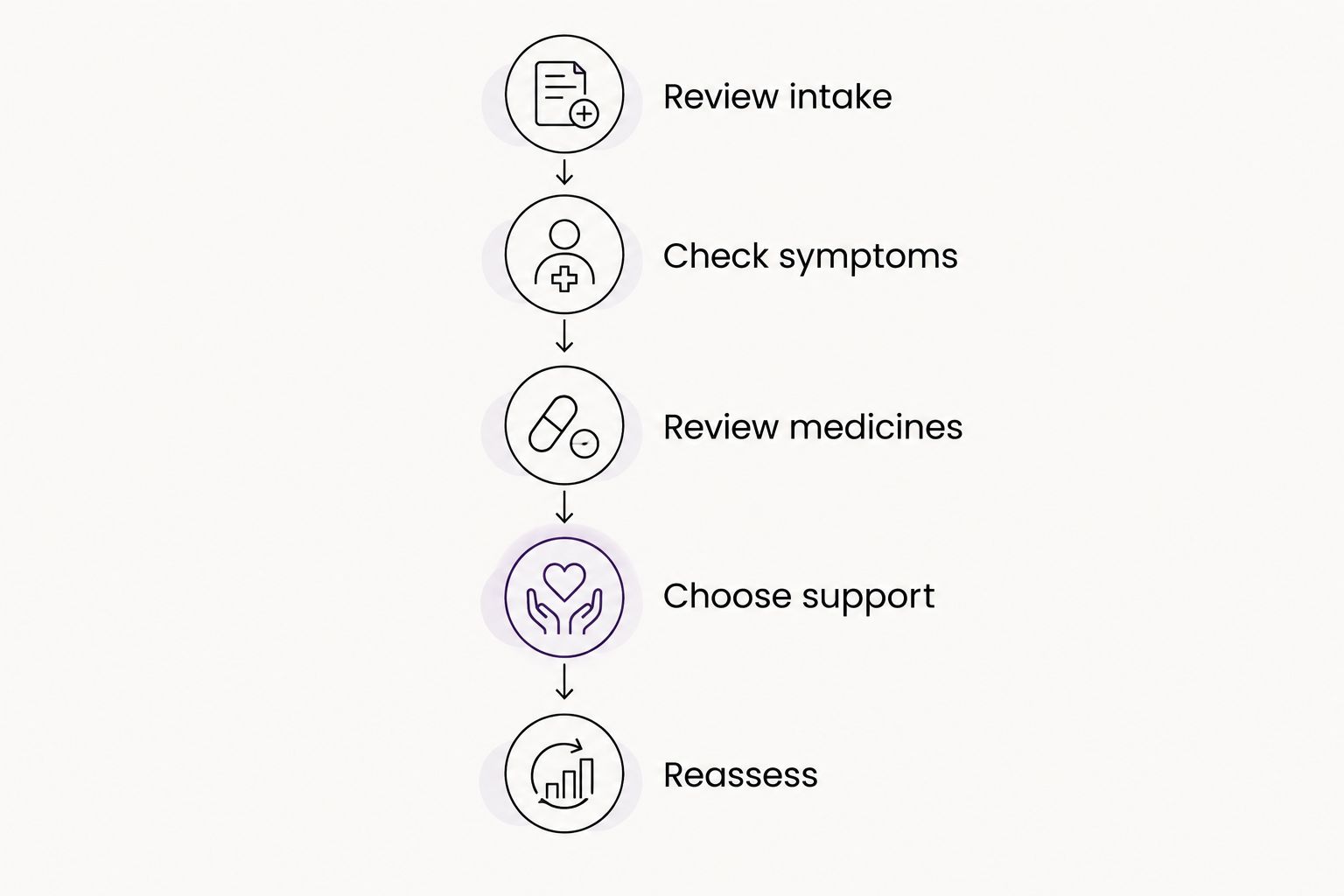
Use this sequence:
- Review intake: Identify what you struggle to eat or drink.
- Check symptoms: Discuss persistent nausea, constipation, vomiting, or fatigue.
- Review medicines: Include prescriptions, supplements, and fortified drinks.
- Choose support: Select only what addresses the identified need.
- Reassess: Decide whether the product helped and remains necessary.
Directcare offers clinician-connected weight-loss care and blood lab testing. Ask which symptoms require evaluation, whether testing is indicated, and what would change your supplement plan. Do not request a large lab panel simply because a supplement advertisement suggests one.
FAQ
What's the best supplement to take with a GLP-1 medication?
There is no universal best supplement for everyone taking a GLP-1 medication. Protein powder fits a protein shortfall, psyllium can support uncomplicated constipation, and individual nutrients fit documented deficiencies or established risk factors.
Do supplements make semaglutide or tirzepatide work better?
The supplements in this guide are not established add-ons for increasing semaglutide or tirzepatide weight loss. Their role is to address nutrition, bowel regularity, or fluid replacement when needed.
Should I take protein powder during GLP-1 weight loss?
Take protein powder if it helps meet an appropriate protein target that meals do not cover. Adequate nutrition and resistance exercise also matter; powder alone does not prevent muscle loss.
Is psyllium safe for constipation while taking a GLP-1?
Psyllium can be appropriate for uncomplicated constipation when used with adequate fluid. Severe pain, vomiting, marked abdominal swelling, or inability to pass stool or gas requires medical assessment rather than more fiber.
Do I need vitamin B12 injections with a GLP-1?
GLP-1 treatment alone does not establish a need for B12 injections. Your clinician should assess deficiency risk and choose oral or injectable treatment according to the cause and severity of deficiency.
Should everyone taking a GLP-1 get vitamin tests?
No, GLP-1 use alone does not justify testing every vitamin level. Dietary history, symptoms, medical conditions, and medicines should guide whether a specific test will change care.
Can I use a fat burner alongside my GLP-1 prescription?
Do not add a fat burner without reviewing its ingredients with your prescribing clinician. Multi-ingredient weight-loss supplements can introduce stimulant effects, interactions, and other risks without an established role in your treatment plan.
One last thing
A fortified protein shake can already contain vitamins and minerals. Before adding a multivitamin, vitamin D, or another nutrition drink, compare the labels and total amounts. Avoiding duplicate ingredients is a concrete improvement you can make to your 2026 supplement plan today.