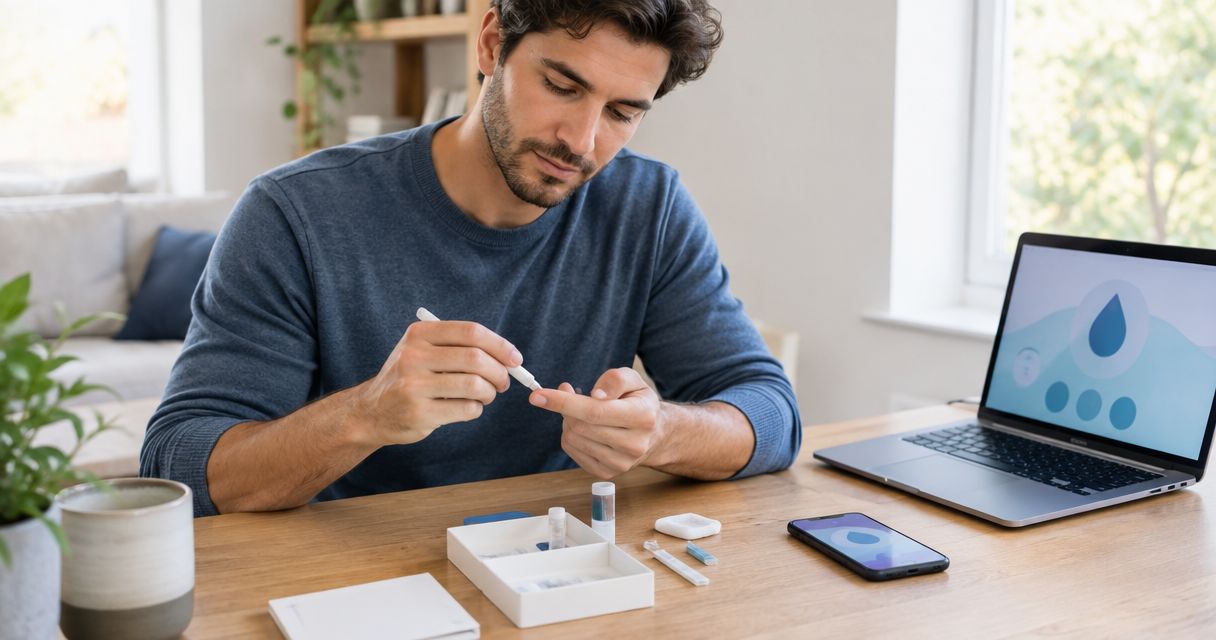
Best overall: a clinician-selected cardiometabolic panel. Best for low-testosterone symptoms: a targeted hormone panel. Best focused screening option: a lipid panel when cholesterol screening is due. The best at-home blood test panel for men in 2026 answers a specific health question, uses an appropriate sample, and comes with a clear follow-up plan.
- The best at-home blood test panel for men targets a clinical question, not the largest biomarker count.
- Directcare connects patients with licensed clinicians for blood lab testing; confirm collection arrangements before ordering.
- Testosterone testing requires symptoms, correctly timed samples, and confirmation before a diagnosis.
- Home collection is not interchangeable with every laboratory blood draw.
Why this matters
A blood panel can identify a reason to investigate further. It cannot diagnose every cause of fatigue, explain every change in weight, or establish that testosterone treatment is appropriate. More tests also create more opportunities for incidental results that need interpretation.
Directcare connects patients with licensed clinicians for blood lab testing. Directcare blood lab testing is best suited to men seeking clinician involvement in choosing tests and interpreting results. Confirm the collection method separately; telehealth access does not establish that a particular panel can be collected at home.
This 2026 ranking compares panel types, not commercial kits. Choose the clinical question first, then confirm that the provider supports the required tests and collection method.
What makes the best blood test panel for men?
- Clinical purpose: Each test should address a symptom, screening recommendation, medical condition, or treatment-monitoring need.
- Suitable collection: Finger-prick samples, mailed collection devices, and venous draws are not interchangeable for every test.
- Useful interpretation: Results need context from your symptoms, medications, medical history, and previous measurements.
- Correct preparation: Meals, exercise, illness, supplements, and collection time can affect particular results.
- Clear follow-up: Know who reviews abnormal findings, arranges confirmation, and tells you when urgent care is necessary.
For a 2026 purchase, ask for the actual test list rather than relying on labels such as men's health or hormone optimization. A long list does not show whether the panel answers your question.
Best men's blood test panels at a glance
The order below moves from general risk assessment to specific symptoms and treatment monitoring. These are clinical categories, not standardized products: providers use different names and include different tests.
| Rank and panel type | Best for | Standout feature | Key limitation |
|---|---|---|---|
| 1. Clinician-selected cardiometabolic panel | Preventive risk assessment | Connects cholesterol and indicated glucose testing with your history | Contents should change with age, risk, and previous results |
| 2. Targeted testosterone panel | Symptoms suggesting testosterone deficiency | Uses properly timed hormone measurements | One low result does not establish a diagnosis |
| 3. CBC with selected iron studies | Fatigue with suspected anemia or iron deficiency | Examines blood counts and iron stores | Does not explain every cause of tiredness |
| 4. Kidney and liver chemistry panel | Monitoring relevant conditions or medications | Assesses selected organ-function markers and electrolytes | Abnormal results need clinical interpretation |
| 5. TRT monitoring panel | Men already receiving testosterone therapy | Supports treatment-specific safety checks | Requires the prescriber's schedule and targets |
Home collection is a separate decision from panel selection. Ask whether every included test is suitable for the proposed sample and what happens if the laboratory rejects it.
1. Cardiometabolic panel: best for preventive risk assessment
A clinician-selected cardiometabolic panel assesses cardiovascular and metabolic risk using tests appropriate to your history. It commonly draws on a lipid panel and, when indicated, glucose testing or hemoglobin A1c. It is not a reason to order every available metabolic marker.
A lipid panel measures cholesterol-related markers and triglycerides. Hemoglobin A1c reflects average blood glucose over approximately 3 months, although conditions affecting red blood cells can make it less reliable.
Cardiometabolic panel pros:
- Supports a discussion about cardiovascular risk rather than isolated numbers.
- Can combine cholesterol assessment with indicated diabetes screening.
- Provides results that clinicians can compare with previous measurements.
Cardiometabolic panel cons:
- Blood results alone do not capture blood pressure, smoking, family history, or other major risk factors.
- Adding tests without a clinical reason can create unnecessary follow-up.
Best for: Men reviewing preventive care, especially when medical history or prior results point to cardiometabolic risk.
If cholesterol screening alone is due, a focused lipid panel can answer that narrower question without a larger bundle. Ask your clinician whether additional glucose testing changes the plan.
Verdict: Buy only the clinician-selected tests that match your screening needs.
2. Targeted testosterone panel: best for low-testosterone symptoms
A targeted testosterone panel investigates symptoms consistent with testosterone deficiency. Reduced sexual desire, fewer spontaneous erections, and other relevant symptoms deserve assessment, but fatigue alone does not establish a hormone problem.
The Endocrine Society recommends diagnosing testosterone deficiency only when compatible symptoms accompany consistently low testosterone concentrations. Confirmation generally requires 2 separate morning blood samples; fasting morning measurements are recommended when assessing suspected deficiency.
Targeted testosterone panel pros:
- Addresses a defined hormone question rather than a broad wellness label.
- Supports confirmation before treatment decisions.
- Allows additional testing, such as LH, FSH, or free testosterone, when clinically indicated.
Targeted testosterone panel cons:
- Illness, sleep disruption, and collection timing can complicate interpretation.
- A home-collection method must be suitable for the specific hormone assay.
Best for: Men with symptoms that warrant an assessment for testosterone deficiency.
Do not assume every hormone bundle needs estradiol, cortisol, or an extensive set of reproductive hormones. The next test depends on the initial result and clinical history. Tell the clinician about shift work because a standard morning appointment does not reflect everyone's sleep schedule.
Verdict: Hold treatment decisions until symptoms and repeat testing support a diagnosis.
3. CBC and iron studies: best for fatigue with suspected anemia
A complete blood count, or CBC, measures red cells, white cells, hemoglobin, and platelets. When the history suggests iron deficiency, a clinician can add ferritin and other iron studies rather than assuming that a CBC alone answers the question.
Ferritin helps assess iron stores, but inflammation can raise it. A result therefore needs context; a single marker is not a complete explanation for fatigue.
CBC and iron studies pros:
- Can identify anemia and blood-count abnormalities needing evaluation.
- Helps distinguish blood-count findings from suspected iron depletion.
- Supports targeted follow-up instead of automatic supplement use.
CBC and iron studies cons:
- Normal results do not rule out sleep disorders, depression, thyroid disease, or other causes of fatigue.
- Iron deficiency in an adult man requires investigation of the cause, not just replacement.
Best for: Men with fatigue and a history or examination that raises concern for anemia or iron deficiency.
Do not start iron solely because you feel tired. Excess iron is harmful, and unexplained iron deficiency can require assessment for blood loss or problems absorbing nutrients.
Verdict: Buy when anemia or iron deficiency is a clinical concern; skip automatic iron supplementation.
4. Kidney and liver chemistry: best for condition monitoring
A chemistry panel can include creatinine, electrolytes, glucose, and selected liver-related markers. A comprehensive metabolic panel also includes measurements such as albumin and bilirubin, but a commercial kidney or liver package does not necessarily contain the same tests.
These measurements help clinicians investigate relevant symptoms and monitor certain conditions or medications. They do not provide a complete certificate of kidney or liver health.
Kidney and liver chemistry pros:
- Supports follow-up of previously abnormal results.
- Helps monitor selected medication effects and medical conditions.
- Allows related measurements to be interpreted together.
Kidney and liver chemistry cons:
- Exercise, hydration, medications, and supplements can affect particular results.
- Blood testing alone misses some problems; kidney assessment can also require urine testing.
Best for: Men with a specific monitoring need established by their clinician.
Elevated ALT or AST does not identify a cause by itself. Likewise, creatinine-based kidney estimates need context, including muscle mass and relevant supplements. Bring a complete medication and supplement list to the review.
Verdict: Buy for a defined monitoring question, not as proof that every organ is healthy.
5. TRT monitoring panel: best for men receiving testosterone
A TRT monitoring panel supports the clinician prescribing testosterone replacement therapy. Testing can include testosterone and hematocrit, with other assessments selected according to your age, risk factors, symptoms, and treatment plan.
Timing depends on the testosterone formulation. A sample drawn at the wrong point in a dosing cycle can mislead dose adjustments, even when the laboratory measurement itself is accurate.
TRT monitoring panel pros:
- Links laboratory review to a prescribed treatment.
- Helps detect treatment-related increases in hematocrit.
- Supports dose review when interpreted alongside symptoms and collection timing.
TRT monitoring panel cons:
- An off-the-shelf bundle does not replace a prescriber's monitoring plan.
- Routine blood results do not establish that fertility is preserved.
Best for: Men already taking prescribed testosterone who need scheduled monitoring.
Tell your prescriber if you want children. Exogenous testosterone can suppress sperm production, and a testosterone blood result is not a fertility test. Fertility assessment can require a separate evaluation, including semen analysis.
Verdict: Buy only the monitoring panel and collection schedule your prescriber specifies.
How to choose a home-collection option
For your 2026 order, separate the clinical decision from the shipping and collection process. Directcare blood lab testing offers a route to clinician involvement; confirm whether the particular testing plan uses home collection or another collection setting.
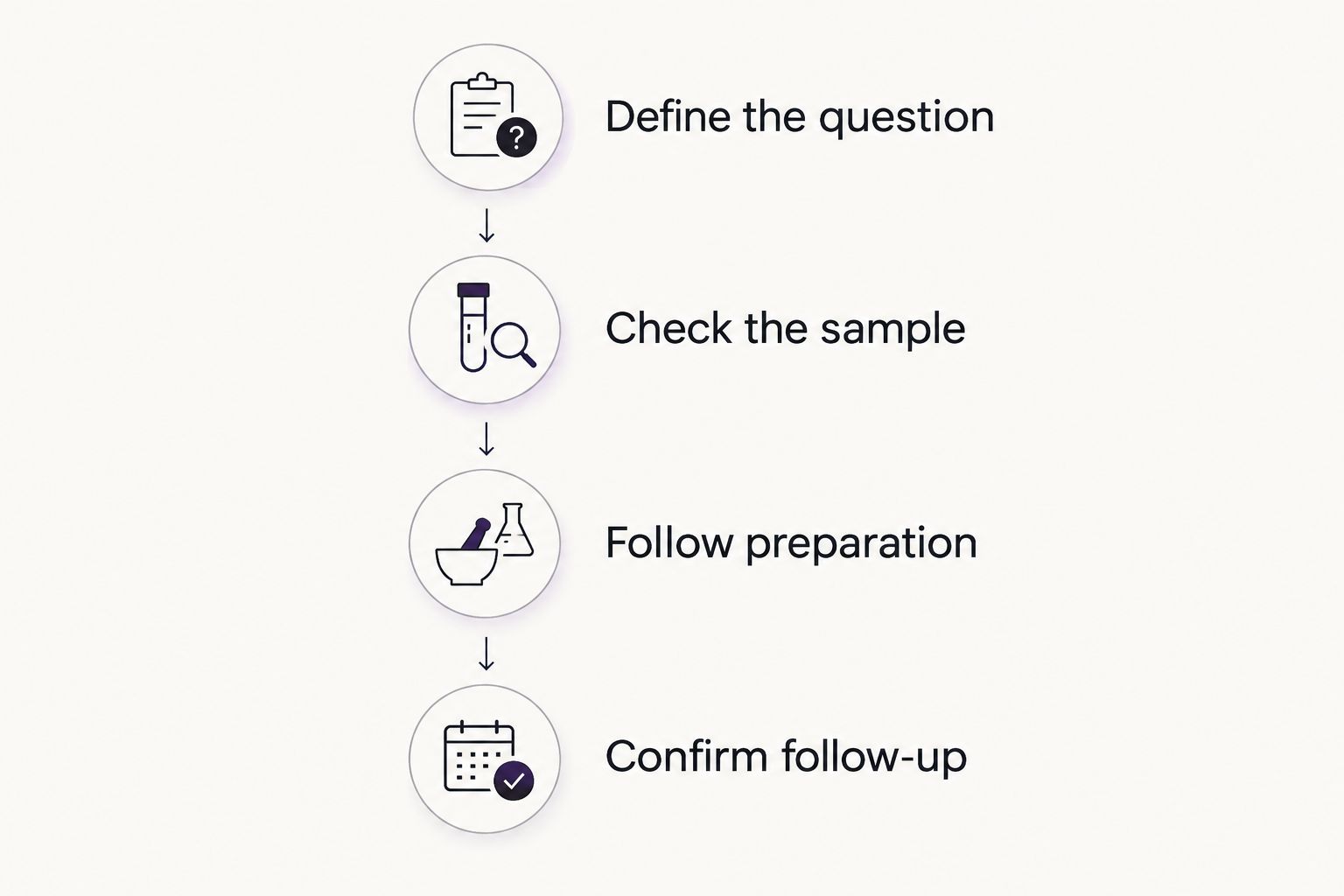
- Define the question. State the symptom, screening need, or treatment being monitored.
- Check the sample. Ask whether the laboratory accepts the proposed collection method for every ordered test.
- Follow preparation. Use the instructions for that exact order, not generic advice from another kit.
- Confirm follow-up. Establish who reviews results and arranges further care.
A fasting plasma glucose test generally requires at least 8 hours without caloric intake. A1c does not require fasting. Do not stop prescribed medication or change your usual routine unless the ordering clinician instructs you to do so.
A finger-prick kit, a mobile venous draw, and an appointment at a collection center are different arrangements. Confirm which one you are purchasing. Also ask how delayed shipping, an insufficient sample, or a rejected specimen is handled.
How we ranked these panels
This 2026 ranking prioritizes clinical purpose, actionable interpretation, suitable collection, and follow-up. Cardiometabolic assessment ranks first for the general preventive-care question; symptom-specific and treatment-monitoring panels serve narrower needs.
The ranking does not represent hands-on kit testing or a comparison of laboratory accuracy. A provider's sample method and actual test menu require separate verification.
Which blood test panel should you choose?
Start with a clinician-selected preventive assessment if you have no specific symptom or treatment-monitoring need. Choose targeted hormone testing for compatible symptoms, CBC and iron studies for suspected anemia, and treatment-specific monitoring when you already take prescribed medication.
Skip the biggest bundle unless every included test has a reason. The useful outcome is a decision about your care, not a longer results page.
FAQ
What's the best at-home blood test panel for men in 2026?
The best at-home blood test panel for men matches a specific screening, symptom, or treatment-monitoring need. For general preventive care, start with a clinician-selected cardiometabolic assessment rather than the largest available bundle.
Can an at-home blood test diagnose low testosterone?
One at-home testosterone result cannot establish testosterone deficiency. Diagnosis requires compatible symptoms and consistently low measurements, generally confirmed with separate morning samples collected using an appropriate method.
Is a finger-prick blood test the same as a venous blood draw?
No, finger-prick collection and venous collection are different sample methods. Suitability depends on the test, collection device, sample handling, and laboratory method; confirm that the ordered tests are supported.
Do I need to fast before a men's blood panel?
Fasting depends on the ordered tests. Fasting plasma glucose generally requires at least 8 hours without calories, while A1c does not require fasting; follow the instructions supplied with your order.
Should I order a full hormone panel if I feel tired?
Fatigue alone is not a reason to order every hormone test. A clinician should assess sleep, medications, mood, medical history, and associated symptoms before selecting targeted testing.
Does a normal blood panel mean I'm healthy?
No, normal blood results do not rule out every medical condition. Screening decisions and symptom assessment also depend on your history, examination, blood pressure, and other appropriate tests.
Can Directcare help me arrange blood lab testing?
Directcare connects patients with licensed clinicians for blood lab testing. Confirm the specific tests, preparation instructions, collection arrangements, and follow-up process before ordering.
One last thing
Bring your previous results, including collection dates and laboratory reference ranges. A change over time can matter more than a single flagged result, and comparisons are clearer when collection conditions are consistent. Do not wait for a mailed kit if you have chest pain, severe shortness of breath, fainting, or other urgent symptoms.