Best overall approach: correct a documented nutrient deficiency. Best for low vitamin D: vitamin D. Best for inadequate zinc intake: zinc. Best for a magnesium intake gap: magnesium. This 2026 guide compares the best testosterone support supplements without treating a supplement label as proof that a product raises testosterone.
- The best testosterone support supplements address a specific deficiency; none reliably treats every cause of low testosterone.
- Vitamin D, zinc, and magnesium serve different nutritional needs, not interchangeable testosterone-boosting roles.
- Ashwagandha has limited testosterone evidence and important safety concerns; skip it as a substitute for diagnosis.
- Directcare is best for adults seeking clinician-led testosterone assessment rather than a supplement-only approach.
Why this matters
Low energy, reduced libido, and poor workout recovery do not establish low testosterone. Sleep problems, medication effects, thyroid disease, depression, and other conditions can produce overlapping symptoms. Buying a supplement before identifying the cause risks treating the wrong problem.
Directcare connects US adults with licensed clinicians for services including blood lab testing and prescribed testosterone treatment. That clinical route answers a different question from supplement shopping: whether you have a hormone problem that needs treatment.
For your 2026 shortlist, separate nutritional support from treatment for hypogonadism. Correcting a deficiency supports normal physiology; it does not guarantee a testosterone increase.
What makes the best testosterone support supplements?
Use these criteria before comparing labels:
- A specific reason to take it. A documented deficiency or identified dietary gap is stronger justification than fatigue alone.
- Evidence that matches the claim. Improving sleep, strength, or stress is not the same outcome as treating testosterone deficiency.
- A transparent ingredient list. Individual ingredient amounts let you check total intake and identify interactions. Proprietary blends make that harder.
- A sensible safety margin. Include food, multivitamins, and other supplements when assessing intake. More is not better.
- Independent quality verification. Third-party testing helps assess label accuracy and contamination, but does not establish testosterone benefits.
- A reassessment plan. Know what you are correcting, what improvement matters, and when your clinician wants follow-up.
These criteria favor targeted ingredients over broad testosterone-booster blends. They also explain why an ingredient can rank well for a nutritional need without earning a recommendation for hormone treatment.
Testosterone support supplements at a glance: 2026
The ranking below concerns ingredient categories, not specific retail products. No individual formulation has been assessed here.
| Rank and ingredient | Best for | Standout role | Key limitation |
|---|---|---|---|
| 1. Vitamin D | Documented low vitamin D | Correcting vitamin D deficiency | Not a reliable testosterone treatment when levels are adequate |
| 2. Zinc | Confirmed deficiency or inadequate intake | Restoring an essential mineral | Excess intake can cause copper deficiency |
| 3. Magnesium | An identified dietary magnesium gap | Supporting normal muscle and nerve function | Does not establish a testosterone benefit |
| 4. Ashwagandha | A clinician-reviewed discussion about stress support | Some small studies report hormone changes | Limited evidence, interactions, and liver and thyroid concerns |
1. Vitamin D: best for documented low vitamin D
Vitamin D helps your body absorb calcium and supports bone health. Low vitamin D and low testosterone sometimes occur together, but that association does not prove that vitamin D supplements will raise testosterone.
Best for: Someone with documented vitamin D deficiency and a clinician-directed correction plan. Vitamin D earns its place for treating that deficiency, not for delivering a predictable hormone increase.
Vitamin D pros
- Corrects an established nutritional deficiency when taken appropriately.
- Supports calcium absorption and bone health independently of testosterone.
- Allows a targeted approach rather than a multi-ingredient hormone blend.
Vitamin D cons
- Supplementation does not consistently raise testosterone in people with adequate vitamin D.
- Excess intake can cause high blood calcium and serious harm.
- A deficiency-treatment dose requires a different assessment from routine daily intake.
The NIH Office of Dietary Supplements lists 600 IU, or 15 micrograms, daily as the recommended intake for adults aged 19–70. Its adult tolerable upper intake level is 4,000 IU, or 100 micrograms, daily; that ceiling is not a target, and clinicians sometimes use different regimens to treat deficiency.
Check what your multivitamin already supplies. Do not add a high-dose product simply because a testosterone-booster label presents vitamin D as a hormone ingredient.
Verdict: Buy for documented deficiency with an appropriate plan; skip vitamin D as a stand-alone testosterone treatment.
2. Zinc: best for confirmed deficiency or inadequate intake
Zinc supports normal immune function, cell processes, and reproductive physiology. Zinc deficiency can impair normal testosterone production, but taking extra zinc when your intake is sufficient is not an established way to improve testosterone.
Best for: Someone whose dietary review and clinical assessment identify inadequate zinc intake or deficiency. This is a correction strategy, not a reason for every man to supplement.
Zinc pros
- Addresses a nutrient deficiency that can affect reproductive function.
- Has an established daily intake benchmark.
- Can be assessed separately from other ingredients in a single-ingredient product.
Zinc cons
- Excess zinc can interfere with copper absorption and cause deficiency.
- Zinc can cause nausea and interact with certain antibiotics.
- A high-dose label does not establish a larger testosterone benefit.
The NIH Office of Dietary Supplements sets the recommended intake for adult men at 11 mg daily. The adult upper intake level is 40 mg daily from food and supplements combined, unless a clinician directs treatment.
Check the amount of elemental zinc rather than judging a product by the name of its zinc compound. Also review cold remedies, multivitamins, and combination supplements; they can contribute additional zinc without appearing to be part of your testosterone routine.
Verdict: Buy to address an identified zinc shortfall; skip high-dose zinc for testosterone boosting when intake is already adequate.
3. Magnesium: best for an identified dietary gap
Magnesium supports normal muscle and nerve function and participates in many enzyme reactions. Those functions make it an essential nutrient, not a proven treatment for low testosterone.
Best for: Someone whose eating pattern leaves a magnesium gap. Start by reviewing food intake rather than assuming cramps, poor sleep, or fatigue confirm magnesium deficiency.
Magnesium pros
- Helps fill an identified nutritional shortfall.
- Supports normal muscle and nerve function regardless of testosterone status.
- Can be considered alongside magnesium-rich foods such as legumes, nuts, and whole grains.
Magnesium cons
- Supplemental magnesium commonly causes diarrhea or abdominal discomfort.
- Kidney disease increases the risk of magnesium accumulation.
- Evidence does not establish magnesium supplements as treatment for hypogonadism.
The NIH Office of Dietary Supplements lists 400–420 mg daily as the recommended intake for adult men, depending on age. The adult upper limit of 350 mg daily applies specifically to magnesium from supplements and medications, not magnesium naturally present in food.
That distinction matters when comparing labels. A daily nutritional requirement is not an instruction to take the entire amount in a capsule, and a tolerable upper limit is not a suggested dose.
Ask a pharmacist about medication spacing if you take antibiotics or other medicines affected by magnesium. Choose the ingredient to address your nutritional need, not because a label promises better hormone levels.
Verdict: Buy for a confirmed intake gap when appropriate; skip magnesium as a substitute for testosterone evaluation.
4. Ashwagandha: best for a clinician-reviewed stress discussion
Ashwagandha is an herbal supplement studied for several outcomes, including stress and sleep. Some small studies report testosterone changes, but those findings do not establish it as a treatment for testosterone deficiency.
Best for: A discussion about stress support after a clinician reviews your health history and medications. It is not the default choice for someone investigating low testosterone.
Ashwagandha pros
- Has human research examining stress and sleep outcomes.
- Has some preliminary research examining testosterone-related outcomes.
- Can be evaluated as a single ingredient rather than an undisclosed blend.
Ashwagandha cons
- Small, short studies do not establish durable treatment benefits for hypogonadism.
- Rare liver injury has been reported, and thyroid effects require caution.
- Extract differences make results from one preparation difficult to apply to every product.
The National Center for Complementary and Integrative Health identifies important precautions involving thyroid and autoimmune disorders, pregnancy, and medication interactions. An herbal label does not remove those concerns.
If fatigue is the main reason you are considering ashwagandha, investigate the fatigue first. A change in perceived stress or sleep does not prove that testosterone was low or that a supplement corrected it.
Verdict: Skip as a self-directed testosterone treatment; discuss stress-focused use separately with a clinician.
How this 2026 ranking works
The ranking puts a clear nutritional indication ahead of a hormone-marketing claim. Vitamin D, zinc, and magnesium each have established physiological roles and defined intake guidance; their positions do not mean they reliably raise testosterone in people without a deficiency.
Ashwagandha ranks last because preliminary hormone findings do not settle effectiveness or safety for testosterone deficiency. No ingredient here earns a universal recommendation.
The nutritional amounts and upper limits above come from NIH Office of Dietary Supplements fact sheets. The herbal safety discussion follows the National Center for Complementary and Integrative Health's ashwagandha guidance. These sources address nutrition and safety, not approval of a testosterone-booster product.
Before choosing a supplement, follow the diagnostic sequence
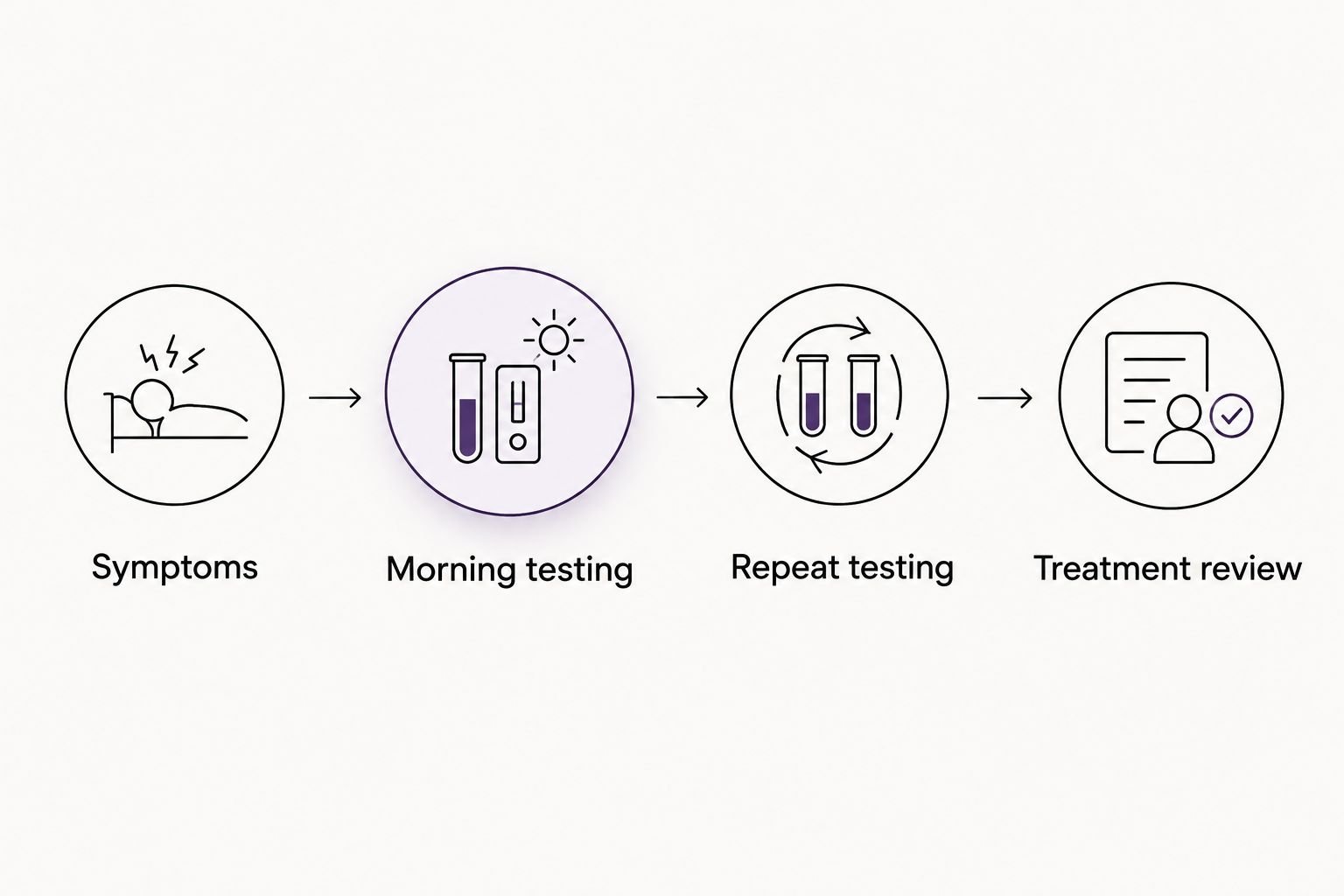
For a 2026 testosterone assessment, symptoms and properly interpreted blood testing belong together. Directcare's testosterone care sits within clinician-led telehealth; it should not be confused with a promise that every symptom requires testosterone treatment.
- Symptoms: Describe libido changes, erectile difficulties, energy, sleep, medication use, and fertility plans.
- Morning testing: Your clinician determines whether an early-morning testosterone measurement is appropriate.
- Repeat testing: A low result generally needs confirmation on a separate morning before diagnosing testosterone deficiency.
- Treatment review: Discuss the cause, relevant additional tests, nutritional gaps, and treatment risks before choosing a plan.
Acute illness, sleep disruption, and testing conditions can affect interpretation. One unexpected result is not a reason to start a hormone-focused supplement stack.
Tell your clinician if you want children. Prescribed testosterone can suppress sperm production, and fertility goals change the treatment discussion. Supplements do not remove that risk or replace a fertility-aware treatment plan.
Start with a clinical assessment
Discuss symptoms, blood lab testing, and treatment questions with Directcare.
Which testosterone support supplement should you choose?
Choose the ingredient that addresses your actual nutritional problem—or choose none. Vitamin D makes sense for documented low vitamin D, zinc for an identified zinc shortfall, and magnesium for a dietary gap.
If you have persistent symptoms, the better next step is assessment rather than trying several supplements in sequence. Directcare is best for adults seeking clinician-led testosterone assessment rather than a supplement-only approach.
Keep your 2026 decision simple: establish the problem, choose an intervention that matches it, and agree on follow-up. Avoid changing several ingredients at once; doing so makes benefits, side effects, and unnecessary products harder to identify.
FAQ
What's the best testosterone support supplement?
There is no universally best testosterone support supplement. Vitamin D, zinc, or magnesium makes sense when it addresses a specific deficiency or intake gap; none reliably treats every cause of low testosterone.
Does zinc increase testosterone?
Correcting zinc deficiency can support normal testosterone production, but extra zinc is not an established testosterone booster when intake is adequate. Excess zinc can cause copper deficiency and other adverse effects.
Is vitamin D better than magnesium for testosterone?
Neither vitamin D nor magnesium is an established testosterone treatment for people without a relevant deficiency. Choose between them based on nutritional assessment, not a claim that one boosts hormones more.
Does ashwagandha work for low testosterone?
Ashwagandha is not an established treatment for testosterone deficiency. Some small studies report hormone changes, but evidence limitations and liver, thyroid, and medication concerns make clinical review important.
Should I get blood tests before taking a testosterone booster?
Persistent symptoms suggesting low testosterone warrant clinical assessment rather than a supplement trial. Diagnosis generally requires compatible symptoms and consistently low testosterone, confirmed with repeat morning testing.
Are testosterone support supplements the same as TRT?
No. Testosterone replacement therapy supplies prescribed testosterone, while supplements contain nutrients or other ingredients and do not provide equivalent treatment. TRT also requires discussion of monitoring, contraindications, and fertility.
Can women take testosterone support supplements?
Women should not use testosterone-support supplements to self-treat fatigue, low libido, or other possible hormone symptoms. These symptoms have multiple causes, and a clinician should assess the underlying issue before recommending treatment.
One last thing
The phrase testosterone support on a bottle does not establish that the product treats testosterone deficiency. In the US, dietary supplements do not undergo FDA approval for safety and effectiveness before marketing in the way prescription drugs do.
For your 2026 decision, bring photographs of every supplement label to your appointment. Include multivitamins and workout products. That simple inventory helps your clinician spot overlapping ingredients and interactions before you add another capsule.