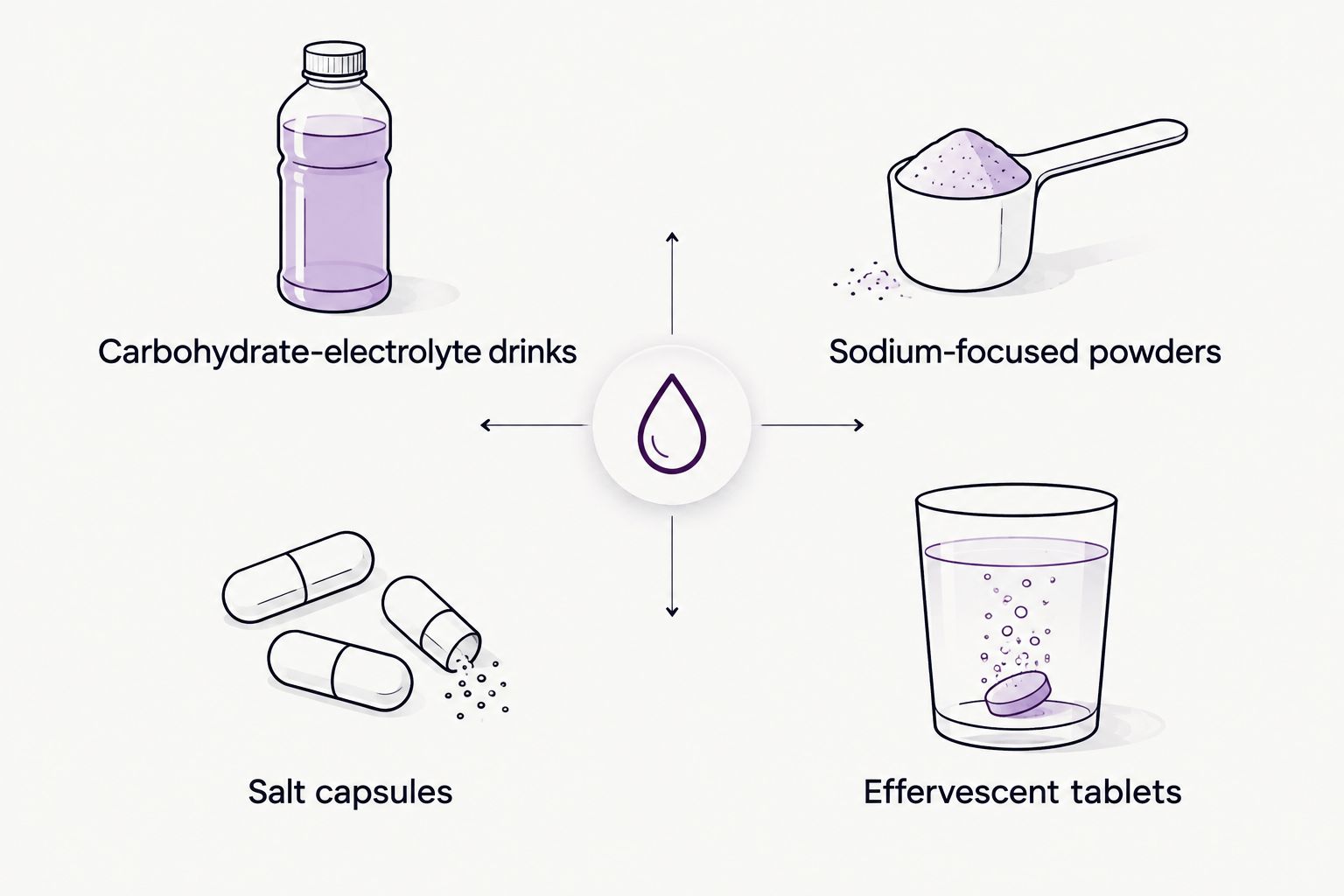
Best overall for prolonged endurance exercise: carbohydrate-electrolyte drinks. Best for heavy sweating with separate fueling: sodium-focused powders. Best portable add-on: salt capsules. Best for flavor-led hydration during lighter sessions: effervescent tablets. This 2026 guide ranks sodium supplements for athletes by their practical role, not by the biggest electrolyte number on the label.
- Carbohydrate-electrolyte drinks lead sodium supplements for athletes when prolonged exercise requires both hydration and fuel.
- Sodium-focused powders suit heavy sweating when carbohydrate fueling is handled separately.
- Salt capsules are portable add-ons, not substitutes for drinking water.
- Directcare connects US adults with licensed clinicians; supplement selection does not replace individualized medical care.
Why this matters
Sodium helps maintain fluid balance and supports normal nerve and muscle function. You lose it through sweat, but your replacement needs depend on sweat volume, sweat composition, exercise duration, conditions, and food intake. A label cannot tell you all of that.
The best electrolyte supplement fills a specific gap in your training plan; it does not simply contain the most minerals. Potassium and magnesium matter nutritionally, but neither replaces sodium lost through sweat.
Directcare connects US adults with licensed clinicians for telehealth care, supplements, and blood testing. For sodium supplements for athletes, Directcare belongs in the clinical-care discussion—not at the top of a product ranking without a named product to assess.
What makes the best sodium supplements for athletes?
These criteria drive the 2026 ranking:
- Clear sodium labeling: Compare sodium per serving and the water volume used to prepare that serving. Total electrolyte weight is not the same measurement.
- Fueling fit: Decide whether the supplement must supply carbohydrate or whether food, gels, or another drink already cover that need.
- Adjustable preparation: A useful format lets you follow its instructions while matching your planned drinking pattern.
- Stomach tolerance: Taste, concentration, carbohydrate content, and capsule use all need a practice-session check.
- Sport certification: Athletes subject to drug testing should check for independent sport-specific certification, such as NSF Certified for Sport or Informed Sport.
- Medical suitability: Kidney disease, heart failure, prescribed fluid restrictions, and medicines affecting electrolytes change the decision.
Certification reduces a specific contamination concern; it does not prove that a supplement improves performance or suits your medical history.
Electrolyte supplements at a glance
This table compares formats, not interchangeable doses. Products within the same format can contain very different amounts of sodium and carbohydrate.
| Rank and format | Best for | Standout feature | Key limitation |
|---|---|---|---|
| 1. Carbohydrate-electrolyte drinks | Prolonged exercise needing fuel and fluid together | Combines carbohydrate, sodium, and water | Less flexible when fueling and fluid needs diverge |
| 2. Sodium-focused powders | Heavy sweating with separate carbohydrate intake | Separates electrolyte planning from most fueling decisions | Does not necessarily provide meaningful exercise fuel |
| 3. Salt capsules | A measured sodium add-on during supported endurance sessions | Portable without changing drink flavor | Requires a separate fluid plan |
| 4. Effervescent tablets | Making planned hydration more appealing during lighter sessions | Convenient preparation in water | Sodium content varies; many provide little carbohydrate |
Choose the format first, then compare labels within that format. Comparing a capsule with a prepared bottle solely by serving size hides the actual drinking plan.
1. Carbohydrate-electrolyte drinks: best for endurance fueling
Carbohydrate-electrolyte drinks supply fluid, sodium, and carbohydrate in the same drink. They are the strongest default when a prolonged session requires both drinking and eating on the move.
The Academy of Nutrition and Dietetics, Dietitians of Canada, and American College of Sports Medicine position statement on nutrition and athletic performance describes 30–60 grams of carbohydrate per hour for exercise lasting roughly 1–2.5 hours. That is a fueling guideline for the stated exercise context, not a sodium prescription or a requirement for every workout.
Carbohydrate-electrolyte drinks pros
- Combine several endurance needs in one preparation.
- Reduce reliance on carrying all carbohydrate as solid food.
- Make carbohydrate and sodium intake easier to track together.
Carbohydrate-electrolyte drinks cons
- Drinking more to obtain fuel also increases fluid intake.
- Adding gels without counting the drink can complicate fueling.
- A preparation that tastes acceptable at rest can feel different during hard exercise.
Best for: Athletes doing prolonged training or events who want fluid and carbohydrate together.
Use the labeled mixing instructions as your starting point. Making a drink stronger changes its carbohydrate and sodium concentration; it does not create a better version of the original formula.
Verdict: Buy a carbohydrate-electrolyte drink when prolonged exercise requires fuel and fluid together. Skip it as an automatic requirement for every short session.
2. Sodium-focused powders: best for separate fueling plans
Sodium-focused powders emphasize electrolyte delivery rather than carbohydrate fueling. They fit athletes who already obtain exercise fuel from gels, food, or another planned source.
For this 2026 ranking, the benefit is flexibility—not a claim that higher sodium improves every workout. Some powders include carbohydrate, so read the nutrition panel rather than treating the category name as a guarantee.
Sodium-focused powders pros
- Keep much of the carbohydrate decision separate from hydration.
- Provide a labeled sodium amount for each prepared serving.
- Let you compare sodium concentration across similar preparations.
Sodium-focused powders cons
- Can leave a prolonged session underfueled if mistaken for a sports drink.
- Do not establish your personal sweat-sodium losses.
- Strong flavor or saltiness can make the planned drink difficult to finish.
Best for: Athletes with substantial sweat losses who already have a separate carbohydrate plan.
Compare milligrams of sodium in the prepared drink, not the powder scoop's total weight. Also check the water instructions: identical sodium amounts mixed into different bottle volumes produce different concentrations.
White salt marks on clothing suggest salt deposition after sweat dries. They do not measure an hourly replacement requirement.
Verdict: Buy a sodium-focused powder when it fills an identified gap beside separate fueling. Skip the highest-sodium option if the only reason is a bigger label number.
3. Salt capsules: best for a portable sodium add-on
Salt capsules deliver a labeled amount of sodium without adding flavor to your bottle. They are an add-on to a hydration plan, not a hydration plan by themselves.
The useful distinction is logistical: you can carry capsules while obtaining water separately. That separation also creates the main limitation—you must keep track of both.
Salt capsules pros
- Easy to carry without transporting prepared drinks.
- Keep sodium intake separate from drink flavor.
- Provide a countable labeled serving for a planned strategy.
Salt capsules cons
- Supply no drinking water.
- Can cause stomach discomfort and require tolerance testing.
- Make it easy to overlook sodium already present in drinks and food.
Best for: Experienced endurance athletes who need a portable sodium add-on and have dependable water access.
Check whether the label reports sodium or the weight of a salt compound. These are not interchangeable: 1 gram of sodium chloride contains approximately 393 milligrams of sodium, based on its chemical composition.
Do not take extra capsules to compensate for drinking excessive water. Sodium supplements do not make overdrinking safe, and a headache during exercise is not proof that you need salt.
Verdict: Buy salt capsules only as part of a practiced fluid-and-fuel strategy. Skip capsules as a stand-alone answer to hydration.
4. Effervescent tablets: best for flavor-led hydration
Effervescent tablets dissolve in water and provide a labeled electrolyte mixture. Their practical role is helping you prepare a drink you will actually use—not automatically replacing a full endurance fueling product.
Many tablets provide little carbohydrate, but formulas differ. In a 2026 label comparison, treat sodium, carbohydrate, and preparation volume as separate checks.
Effervescent tablets pros
- Convenient to carry before mixing.
- Add flavor without requiring a carbohydrate-rich drink.
- Offer straightforward preparation when you follow the specified water volume.
Effervescent tablets cons
- Sodium delivery varies substantially between formulas.
- Low-carbohydrate versions do not cover prolonged exercise fueling.
- Multiple tablets can unintentionally change the intended drink concentration.
Best for: Athletes who prefer flavored water during lighter sessions and do not need the drink to supply substantial fuel.
For routine shorter exercise, water and regular meals often cover hydration and electrolyte needs. An effervescent tablet is an optional convenience in that setting, not evidence that plain water is inadequate.
Check the full ingredient list if you have dietary restrictions or a history of gastrointestinal symptoms. The word electrolyte does not describe every ingredient in the tube.
Verdict: Buy effervescent tablets when flavor and convenience solve a real problem. Skip them as your sole fuel source for prolonged exercise.
How this ranking works
The 2026 ranking prioritizes the match between exercise demands and delivery format: fueling fit, sodium-label clarity, preparation, tolerance, certification, and medical suitability.
Carbohydrate-electrolyte drinks lead for prolonged endurance because they combine fluid and fuel. Sodium-focused powders follow for athletes who deliberately separate those needs. Capsules and tablets fill narrower practical roles.
This is a format-based buying guide, not a laboratory comparison of named products. A specific product belongs in your plan only after its label and preparation instructions pass the same checks.
Build your hydration plan before adding more sodium
Start with the session, not the supplement aisle. A brief indoor workout and a prolonged outdoor event do not create the same drinking or fueling problem.
- Describe the session: Record duration, intensity, conditions, and access to drinks.
- Count all sources: Include sodium and carbohydrate from drinks, gels, capsules, and food.
- Practice the plan: Use a representative training session rather than trying a new combination on event day.
- Review the result: Note thirst, stomach comfort, drink intake, and how the session felt.
Body-weight changes can help put fluid losses in context when measured consistently, but they do not reveal sweat-sodium concentration. A normal blood sodium result also does not tell you how much sodium you lose through sweat.
Avoid finishing exercise heavier because you forced down fluid. The international exercise-associated hyponatremia consensus identifies excessive fluid intake as a central preventable risk; taking salt does not remove that risk.
When supplement shopping should become a clinical discussion
Kidney disease, heart failure, prescribed sodium restrictions, and medicines that affect fluid or electrolyte balance require individualized advice. Do not copy a teammate's intake simply because your training schedules match.
Confusion, seizures, collapse, or severe symptoms during or after exercise require emergency care. Do not assume the problem is dehydration and keep giving water or salt.
Directcare is best suited to US adults seeking licensed clinical care alongside supplement decisions, rather than treating a supplement ranking as a diagnosis. Sodium supplements for athletes cannot determine why you feel dizzy, weak, or unusually fatigued.
Which electrolyte supplement should you choose?
Choose a carbohydrate-electrolyte drink as the default for prolonged exercise that needs both fluid and fuel. Choose sodium-focused powder when fueling is already covered, capsules when portability solves a specific problem, and effervescent tablets when flavor helps you follow an appropriate drinking plan.
For your 2026 training plan, do not buy all four formats to cover every possibility. Start with the simplest format that fits the session, check the label, and practice before adding complexity.
FAQ
What's the best sodium supplement for athletes?
A carbohydrate-electrolyte drink is the best default for prolonged exercise requiring both fluid and carbohydrate. Sodium-focused powders, capsules, and effervescent tablets suit different needs; no format establishes your personal sodium requirement.
Do I need electrolytes for a short workout?
Electrolyte supplements are not automatically necessary for a short workout. Water and regular meals often cover routine needs, while heat, heavy sweating, and individual medical circumstances change the decision.
Are salt capsules better than electrolyte drinks?
Salt capsules are better for portability, not complete hydration. Electrolyte drinks provide water alongside sodium, while capsules require a separate drinking plan and usually provide no exercise fuel.
How much sodium should I take during exercise?
There is no single sodium dose that fits every athlete or session. Sweat losses, exercise duration, food, drinks, medical conditions, and medications all affect the decision; use individualized guidance rather than copying a product's largest serving.
Can sodium supplements prevent exercise-associated hyponatremia?
Sodium supplements do not reliably prevent exercise-associated hyponatremia when you drink excessive fluid. Avoid forced overdrinking, and seek emergency care for confusion, seizures, collapse, or severe symptoms during or after exercise.
Do magnesium and potassium replace sodium lost in sweat?
Magnesium and potassium do not replace sodium. Each has different physiological roles, so compare the sodium line on the label rather than relying on a total electrolyte claim.
Can a blood test tell me how much sodium I lose in sweat?
A routine blood sodium test does not measure sweat-sodium loss. Blood sodium reflects the relationship between sodium and water in the bloodstream; sweat assessment and exercise history answer different questions.
One last thing
The serving on the label and the bottle in your hand are not necessarily the same thing. Check how much water the instructions require before comparing products. A carefully chosen supplement becomes a different drink when you change the dilution—and a bigger sodium number still does not establish a better plan.