
Best overall for eligible patients with disruptive hot flashes: systemic menopausal hormone therapy. Best when you also need contraception: hormonal contraception; best medication-free option: menopause-specific cognitive behavioral therapy. This 2026 guide ranks online perimenopause treatment options by the symptoms they address, their limitations, and the clinical review they require.
- Systemic HRT leads online perimenopause treatment options for eligible patients with disruptive hot flashes and night sweats.
- Hormonal contraception deserves consideration when pregnancy prevention and cycle control are priorities.
- Vaginal estrogen targets vaginal dryness; it does not treat whole-body hot flashes.
- Directcare connects adults seeking online HRT care with licensed clinicians; treatment requires an individual assessment.
Why this matters
Perimenopause treatment should match your symptoms—not simply a hormone result. Hot flashes, vaginal dryness, irregular bleeding, and sleep disruption do not all call for the same prescription.
Directcare is an online HRT option for adults seeking licensed-clinician care. Choosing a telehealth platform and choosing a treatment are separate decisions: the clinician still needs to establish what fits your history.
For your 2026 treatment decision, start with the symptom you most want to change. Then consider pregnancy prevention, bleeding patterns, medical risks, and whether an examination is needed before prescribing.
Online care is a way to access treatment, not a treatment itself. A useful consultation ends with a clear explanation of the proposed therapy, its risks, and how follow-up will work.
What makes the best perimenopause treatment?
These criteria determine the ranking:
- Symptom fit: Does the treatment address hot flashes, vaginal symptoms, bleeding, or symptom-related distress?
- Medical suitability: Do your history, medications, and risk factors support its use?
- Contraception needs: Do you still need pregnancy prevention? Menopausal HRT does not provide contraception.
- Safety monitoring: Does the plan account for bleeding changes, side effects, and treatment-specific testing?
- Treatment burden: Can you follow the dosing, appointments, and monitoring the option requires?
- Limits of telehealth: Does the clinician recognize when you need an examination or in-person testing?
No treatment wins every category. The best choice targets your main problem without creating an avoidable safety issue.
Perimenopause treatment options at a glance
| Rank and treatment | Best for | Standout feature | Key limitation |
|---|---|---|---|
| 1. Systemic menopausal hormone therapy | Disruptive hot flashes and night sweats | Most effective treatment for menopausal vasomotor symptoms | Not suitable for everyone; does not prevent pregnancy |
| 2. Hormonal contraception | Pregnancy prevention with cycle control | Addresses contraception and bleeding patterns together | Estrogen-containing methods have important eligibility restrictions |
| 3. Fezolinetant | Hot flashes when a nonhormonal prescription is preferred | Targets a brain pathway involved in temperature regulation | Requires liver safety screening and monitoring |
| 4. Selected SSRIs or SNRIs | Hot flashes alongside a separate mood-treatment need | Certain medicines can address both concerns | Sexual side effects, interactions, and withdrawal symptoms matter |
| 5. Low-dose vaginal estrogen | Vaginal dryness and painful sex related to low estrogen | Treats vaginal tissue directly | Does not treat hot flashes or provide contraception |
| 6. Menopause-specific CBT | Symptom-related distress and coping difficulties | Medication-free skills for managing symptom impact | Does not replace estrogen or treat vaginal tissue changes |
1. Systemic HRT: best for disruptive hot flashes
Systemic menopausal hormone therapy delivers estrogen throughout the body. It is the most effective treatment for menopause-related hot flashes and night sweats, according to The Menopause Society’s hormone therapy guidance.
If you have a uterus, systemic estrogen generally requires adequate endometrial protection, usually with a progestogen. Route, dose, bleeding pattern, and medical history all affect the prescription.
Systemic HRT pros:
- Treats hot flashes and night sweats directly.
- Can improve sleep when nighttime symptoms cause awakenings.
- Allows clinicians to tailor the route and regimen.
Systemic HRT cons:
- Requires individualized assessment of clotting, cardiovascular, cancer, and liver history.
- Can cause bleeding changes, breast tenderness, or other side effects.
- Does not prevent pregnancy.
Best for: Eligible patients whose main problem is disruptive vasomotor symptoms.
In 2026, the useful question is not whether HRT is universally safe or unsafe. Ask whether the proposed regimen fits your personal risk profile and treatment goals.
Verdict: Hold until a clinician confirms eligibility and the right regimen.
2. Hormonal contraception: best for pregnancy prevention
Hormonal contraception deserves a separate discussion when you need pregnancy prevention during perimenopause. Depending on the method, it can also help control bleeding; combined hormonal contraception can reduce vasomotor symptoms in suitable patients.
Contraceptive hormones and menopausal HRT are not interchangeable. Your clinician should explain which goal the prescription serves and how the plan changes as you approach menopause.
Hormonal contraception pros:
- Provides pregnancy prevention when used correctly.
- Can improve heavy or unpredictable bleeding, depending on the method.
- Offers a treatment path when cycle control matters alongside symptoms.
Hormonal contraception cons:
- Estrogen-containing methods are unsuitable for some patients, including those with certain clotting risks or migraine with aura.
- Hormonal methods can change bleeding patterns and complicate interpretation of menstrual changes.
Best for: Patients who need contraception and want help managing their cycles.
Do not assume irregular periods mean pregnancy is no longer possible. Menopause is generally identified after 12 months without a period, when another cause or a treatment affecting bleeding does not explain the absence.
Verdict: Hold until contraceptive eligibility and bleeding history are reviewed.
3. Fezolinetant: best for a targeted nonhormonal prescription
Fezolinetant is a nonhormonal prescription treatment for moderate to severe vasomotor symptoms due to menopause. It acts on a temperature-regulation pathway rather than supplying estrogen.
A clinician must confirm that the indication and safety requirements fit your situation. A request for nonhormonal care does not automatically make this medicine the right choice during perimenopause.
Fezolinetant pros:
- Treats hot flashes without estrogen.
- Provides a symptom-specific prescription option.
- Offers an alternative when hormone therapy is not the chosen approach.
Fezolinetant cons:
- Carries an FDA boxed warning about rare but serious liver injury.
- Requires liver testing before treatment and scheduled monitoring afterward.
- Does not provide contraception or treat vaginal dryness.
Best for: Patients seeking a nonhormonal hot-flash treatment who meet prescribing requirements.
Review other medicines and supplements with the prescriber. New jaundice, dark urine, or other symptoms suggesting liver injury require prompt medical attention and action according to the prescribing instructions.
Verdict: Hold until medication interactions and liver safety requirements are checked.
4. Selected SSRIs or SNRIs: best when mood care also matters
Certain selective serotonin reuptake inhibitors and serotonin-norepinephrine reuptake inhibitors reduce vasomotor symptoms. Some also treat depression or anxiety, but the medicine and dose used for hot flashes do not automatically provide adequate mood treatment.
A clinician should assess these as separate treatment goals. Low mood also deserves evaluation rather than being attributed to hormones without discussion.
Selected SSRIs or SNRIs pros:
- Offer nonhormonal relief for hot flashes.
- Include options with evidence supporting vasomotor symptom treatment.
- Can address a separate mood disorder when appropriately selected and prescribed.
Selected SSRIs or SNRIs cons:
- Can cause nausea, sexual side effects, or sleep changes.
- Have medication interactions that affect selection.
- Often require a taper rather than abrupt discontinuation.
Best for: Patients with hot flashes who also need assessment or treatment for depression or anxiety.
Not every antidepressant treats hot flashes, and not every hot-flash prescription treats depression. Ask the prescriber to name the intended benefit and explain how improvement will be assessed.
Verdict: Hold until the symptom target, interactions, and stopping plan are clear.
5. Low-dose vaginal estrogen: best for vaginal dryness
Low-dose vaginal estrogen treats vaginal symptoms associated with declining estrogen, including dryness and pain with sex. It delivers treatment locally and has much lower systemic exposure than systemic estrogen therapy.
This makes vaginal estrogen a different decision from whole-body HRT. It is not a substitute when hot flashes are the main concern.
Low-dose vaginal estrogen pros:
- Targets vaginal tissue changes directly.
- Can relieve dryness and discomfort with sex.
- Generally does not require added progestogen when used at recommended low doses.
Low-dose vaginal estrogen cons:
- Does not treat hot flashes or prevent pregnancy.
- Requires review of unexplained bleeding and relevant medical history.
- Does not treat every cause of vaginal pain or irritation.
Best for: Patients whose main symptoms are vaginal dryness or painful sex related to low estrogen.
Moisturizers and lubricants offer nonhormonal symptom support, but persistent pain, bleeding, discharge, or irritation needs assessment. Infection, skin conditions, and other causes require different treatment.
Verdict: Hold until persistent symptoms and any unexplained bleeding are assessed.
6. Menopause-specific CBT: best for medication-free coping
Menopause-specific cognitive behavioral therapy teaches practical ways to respond to symptoms and reduce their impact. It focuses on thoughts, behaviors, and coping patterns rather than replacing hormones.
CBT can complement medical treatment. Recommending it does not mean hot flashes or sleep disruption are imaginary.
Menopause-specific CBT pros:
- Avoids medication interactions.
- Provides skills for managing symptom-related distress.
- Can be used alongside a prescribed treatment plan.
Menopause-specific CBT cons:
- Requires active participation and practice.
- Does not restore estrogen or treat vaginal tissue changes.
- Depends on access to a suitable clinician or structured program.
Best for: Patients who want medication-free help with the impact of symptoms, including those using another treatment.
Choose menopause-specific support rather than assuming any general wellness course provides the same approach. Persistent insomnia also deserves its own assessment and, when appropriate, insomnia-focused CBT.
Verdict: Buy only a clearly described, structured program—not a hormone-balancing promise.
How the options are ranked
This 2026 ranking prioritizes symptom fit, evidence-supported benefit, medical suitability, contraception, and monitoring burden. It is a treatment decision guide, not a comparison of telehealth providers or a claim that every option is suitable for every patient.
The clinical distinctions follow guidance from The Menopause Society, ACOG, NICE’s menopause guideline, and FDA prescribing information for fezolinetant. Those sources address different questions: symptom treatment, contraceptive eligibility, diagnosis, and medicine-specific safety.
What to prepare for an online consultation
Bring a short symptom summary rather than asking for a particular hormone level or prescription. Give the clinician enough detail to separate menopause-related symptoms from problems needing another assessment.
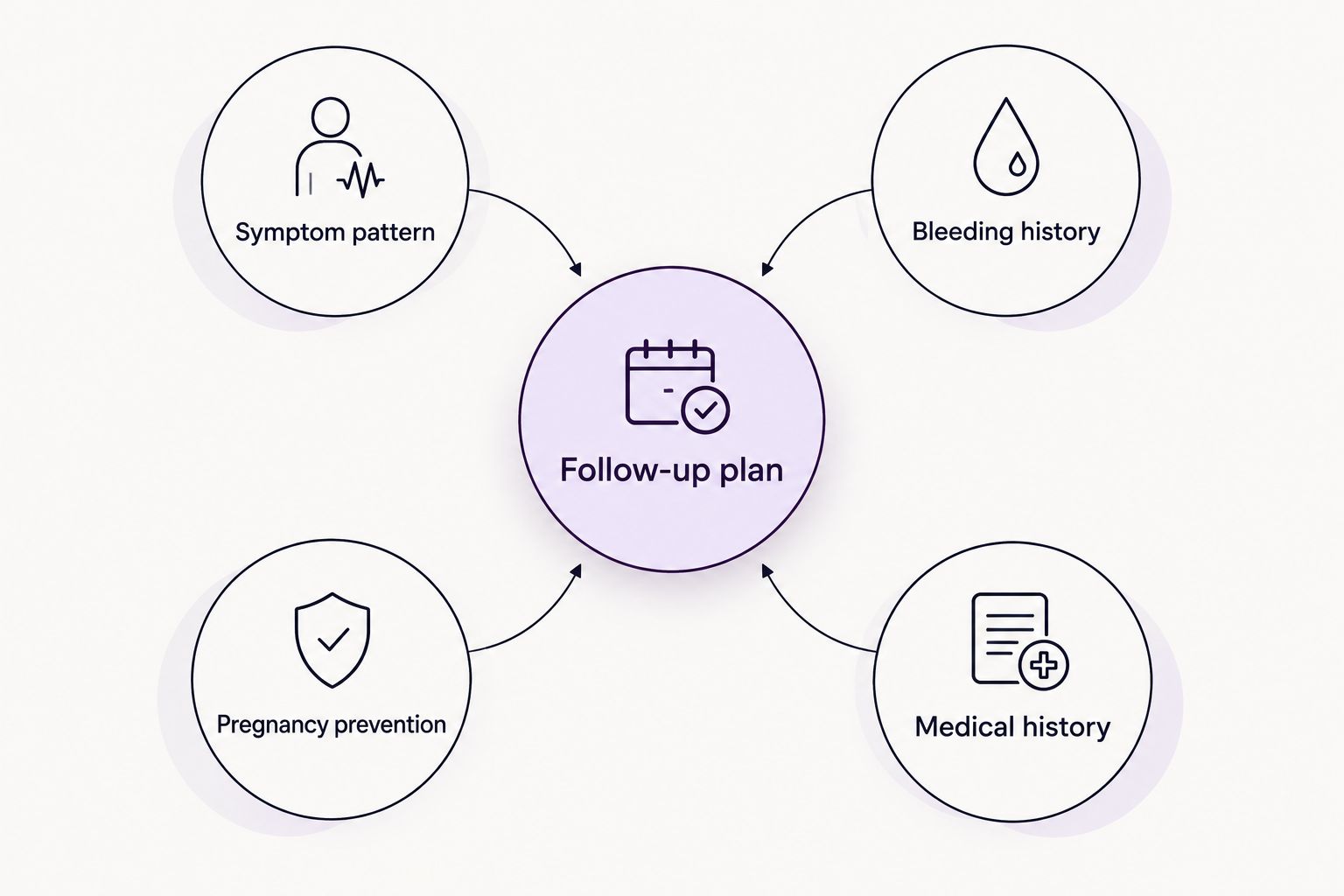
- Symptom pattern: Note your main symptoms and their effect on sleep, work, and sex.
- Bleeding history: Record recent periods, heavy bleeding, and bleeding between periods or after sex.
- Pregnancy prevention: Explain whether pregnancy is possible and what contraception you use.
- Medical history: Include medicines, supplements, migraines, clotting history, cancer history, and liver conditions.
- Follow-up plan: Ask what improvement to expect, what side effects to report, and when reassessment happens.
For otherwise healthy people aged 45 years or older with typical symptoms, perimenopause is usually assessed clinically rather than confirmed through routine hormone testing. Hormone levels fluctuate, and hormonal contraception can make results harder to interpret.
Symptoms suggesting menopause before 40 years of age need assessment for premature ovarian insufficiency. Blood tests can also be useful when the clinician suspects another explanation, such as thyroid disease or anemia.
Which perimenopause treatment should you choose?
For eligible patients with disruptive hot flashes, systemic HRT is the default option to discuss—not a prescription to start without assessment. If contraception is essential, discuss that first. If vaginal dryness is the main problem, focus the consultation on local treatment rather than assuming systemic HRT is necessary.
Directcare connects patients with licensed clinicians for prescribed HRT and blood lab testing. For your 2026 consultation, ask which symptoms the proposed treatment addresses, why it fits your history, and which findings would change the plan.
FAQ
What's the best online perimenopause treatment?
The best online perimenopause treatment depends on your main symptom and medical history. Systemic HRT is the most effective treatment for menopausal hot flashes, while contraception needs, vaginal symptoms, and contraindications can point to a different option.
Can I get perimenopause care through Directcare?
Directcare connects adults with licensed clinicians for prescribed HRT and blood lab testing. The clinician determines whether treatment is appropriate and whether your symptoms require an examination or other evaluation.
Do I need hormone blood tests before starting treatment?
Routine hormone testing is not usually needed to identify perimenopause in otherwise healthy people aged 45 years or older with typical symptoms. A clinician can order targeted tests when age, symptoms, bleeding, or medical history suggests another cause.
Is HRT better than birth control during perimenopause?
HRT and hormonal contraception serve different purposes. HRT treats menopausal symptoms but does not prevent pregnancy; suitable contraceptive methods can provide pregnancy prevention and help manage bleeding.
What can I take for hot flashes if I cannot use estrogen?
Nonhormonal prescription options include fezolinetant and selected SSRIs or SNRIs. Selection depends on the indication, other medicines, medical history, and monitoring requirements; menopause-specific CBT can also help with symptom impact.
Can vaginal estrogen stop night sweats?
Low-dose vaginal estrogen does not treat night sweats. It targets local vaginal symptoms, so disruptive night sweats require a separate treatment discussion.
When is online care not enough for perimenopause symptoms?
Online care is not enough when symptoms require an examination, urgent assessment, or testing that cannot be completed remotely. Seek urgent care for severe bleeding with faintness, chest pain, or shortness of breath; bleeding after menopause also needs prompt evaluation.
One last thing
A normal hormone result does not rule out perimenopause, and an abnormal result does not choose your treatment. Before your 2026 appointment ends, ask: Which symptom are we treating, and how will we know the plan is working?