Best overall: cause-directed clinical care. Best for painful sex after menopause: low-dose vaginal estrogen. Best for stress-related low desire: psychosexual therapy. The best treatment for low libido in women in 2026 depends on whether the problem is desire itself, pain, medication effects, or another health concern.
- The best treatment for low libido in women targets the cause, not a hormone number alone.
- Vaginal estrogen treats menopause-related dryness and pain; it is not a general libido treatment.
- Flibanserin and bremelanotide treat specific diagnosed desire disorders, with different eligibility rules and safety limits.
- Directcare connects women seeking clinician-guided sexual health care with licensed clinicians.
Why this matters
Low desire does not automatically mean you have a disorder. Desire varies with sleep, stress, health, relationships, and life stage; treatment becomes relevant when the change bothers you and you want help.
Hypoactive sexual desire disorder, or HSDD, describes persistently low desire that causes personal distress and is not better explained by another condition, a medication, or relationship problems. Painful sex and HSDD can overlap, but they need different treatment plans.
Directcare connects patients with licensed clinicians for sexual health care. Directcare is an option for women seeking clinician-guided sexual health assessment rather than choosing a treatment from symptoms alone.
This 2026 guide ranks treatment approaches by clinical fit, not by popularity. It provides general education, not a diagnosis or instructions to start, stop, or change a prescription.
What makes the best treatment for low libido in women?
- Cause fit: The treatment addresses what is reducing desire, whether that is pain, medication, distress, or HSDD.
- Evidence: Benefits come from clinical evidence for the specific condition, not a broad promise to balance hormones.
- Eligibility: Menopause status, medical history, pregnancy potential, and other medications affect the choice.
- Safety: Side effects, interactions, and monitoring requirements are clear before treatment starts.
- Meaningful benefit: Success means less distress, greater comfort, or improved desire according to your goals.
- Reassessment: The plan includes a point to review benefit and stop ineffective treatment.
Treatments at a glance
The order below is a decision tree. A lower-ranked option can be the right first treatment when its use case matches your diagnosis.
| Rank and approach | Best for | Standout benefit | Key limitation |
|---|---|---|---|
| 1. Cause-directed clinical care | Unexplained or mixed-cause low desire | Separates desire problems from pain, medication effects, and illness | Requires assessment rather than an immediate prescription |
| 2. Low-dose vaginal estrogen | Menopause-related dryness and painful sex | Treats estrogen-related vaginal tissue changes | Not a direct treatment for HSDD |
| 3. Psychosexual therapy | Stress, anxiety, or sexual concerns | Addresses psychological and relationship contributors | Requires participation and access to suitable care |
| 4. Medication review | Low desire linked to a medicine | Targets a possible medication-related cause | Changes can destabilize the condition being treated |
| 5. Flibanserin | Eligible patients with acquired, generalized HSDD who prefer oral treatment | A daily prescription option for a defined diagnosis | Important alcohol and drug interactions |
| 6. Bremelanotide | Premenopausal patients with HSDD who prefer on-demand treatment | Used before anticipated sexual activity | Injection, nausea, and cardiovascular restrictions |
| 7. Transdermal testosterone | Selected postmenopausal patients with HSDD | Evidence supports a monitored trial in this group | Off-label in the US; monitoring is essential |
1. Cause-directed care: best for unexplained low libido
A clinical assessment is the strongest starting point when you do not know why desire changed. Your clinician reviews the timeline, distress, sexual pain, medications, mood, sleep, and relevant medical history before recommending treatment.
Testing should answer a clinical question. A broad hormone panel does not diagnose HSDD, and a testosterone result alone cannot establish the cause of low desire.
Cause-directed care pros:
- Distinguishes low desire from pain or arousal difficulties.
- Identifies potentially treatable contributors.
- Makes room for more than one cause.
Cause-directed care cons:
- Does not provide an instant medication answer.
- Some findings require examination or additional care.
Best for: New, unexplained, or complicated changes in desire.
Verdict: Hold off on libido prescriptions until the main contributors are assessed.
2. Vaginal estrogen: best for menopause-related painful sex
Low-dose vaginal estrogen treats vaginal and urinary symptoms associated with menopause-related estrogen loss, often called genitourinary syndrome of menopause. When dryness or pain makes sex unpleasant, treating those symptoms addresses a barrier to desire.
It is not a general libido booster. Systemic menopausal hormone therapy has different uses and risks; the two approaches are not interchangeable.
Vaginal estrogen pros:
- Targets estrogen-related vaginal dryness and discomfort.
- Can make sexual activity more comfortable when those symptoms improve.
- Treats a specific condition rather than assuming every desire change is HSDD.
Vaginal estrogen cons:
- Does not directly treat HSDD.
- Unexplained vaginal bleeding needs assessment before treatment.
- A history of hormone-sensitive cancer requires individualized discussion.
Lubricants during sexual activity and regular vaginal moisturizers are nonhormonal options for dryness. Persistent pain still needs evaluation because infection, skin conditions, and pelvic-floor problems require different care.
Best for: Low interest associated with menopause-related dryness or painful penetration.
Verdict: Hold until the cause of pain is confirmed; prioritize comfort before adding a desire medication.
3. Psychosexual therapy: best for stress-related low desire
Psychosexual therapy addresses factors such as performance anxiety, distracting thoughts, sexual expectations, and communication. Approaches can include cognitive behavioral strategies, mindfulness, and couples work when appropriate.
This is not a claim that the problem is imaginary. Desire depends on context as well as physiology, and therapy can accompany medical treatment.
Psychosexual therapy pros:
- Addresses distress without medication interactions.
- Helps clarify preferences, boundaries, and sources of pressure.
- Can support treatment for overlapping medical concerns.
Psychosexual therapy cons:
- Requires participation and a suitable therapeutic fit.
- Does not replace care for pain or a medical condition.
- Couples work is not appropriate in every relationship situation.
Best for: Low desire associated with stress, anxiety, sexual concerns, or relationship patterns.
Verdict: Hold off on assuming a hormone problem when context is a major contributor; seek qualified therapy.
4. Medication review: best for treatment-related sexual changes
Some medicines, including certain antidepressants, can affect desire, arousal, or orgasm. A change that follows starting a medication or increasing its dose deserves a conversation with the prescriber.
The plan might involve adjusting treatment or choosing an alternative, depending on the condition being treated. Do not stop an antidepressant or other prescription abruptly to test whether libido returns.
Medication review pros:
- Investigates a possible contributor to sexual symptoms.
- Considers timing, dose changes, and overlapping effects.
- Protects the original treatment goal while addressing sexual health.
Medication review cons:
- Changing medication can worsen the underlying condition.
- An alternative medicine can introduce different side effects.
- Timing alone does not prove that a drug caused the change.
Best for: Low desire or other sexual changes that started during medication treatment.
Verdict: Hold medication changes until the original prescriber helps build a safe plan.
5. Flibanserin: best for eligible patients preferring oral treatment
Flibanserin is a prescription treatment for acquired, generalized HSDD in patients who meet its current FDA labeling. Acquired means desire was previously satisfactory; generalized means the difficulty is not limited to a particular situation or partner.
It is taken daily, not just before sex. For a 2026 treatment decision, your clinician should check the current FDA prescribing information for eligibility, contraindications, and alcohol instructions.
Flibanserin pros:
- Offers an oral treatment for a defined desire disorder.
- Does not require an injection before anticipated sex.
- Has a clear reassessment point in its prescribing information.
Flibanserin cons:
- Can cause dizziness, sleepiness, low blood pressure, and fainting.
- Alcohol timing and interacting medicines require careful attention.
- Liver impairment and certain drug combinations rule it out.
The FDA prescribing information directs discontinuation after 8 weeks if symptoms do not improve. Improvement is not guaranteed, and this treatment is not intended to enhance sexual performance.
Best for: Eligible patients with acquired, generalized HSDD who prefer a daily oral option.
Verdict: Hold until HSDD, eligibility, and interaction risks are confirmed.
6. Bremelanotide: best for eligible patients wanting on-demand treatment
Bremelanotide is an injectable prescription treatment for acquired, generalized HSDD in premenopausal women. It is used before anticipated sexual activity rather than on a daily schedule.
The FDA prescribing information specifies administration at least 45 minutes before anticipated sexual activity. That timing is an administration instruction, not a promise that desire will appear on schedule.
Bremelanotide pros:
- Offers an on-demand rather than daily approach.
- Has evidence for a specifically defined patient group.
- Provides a different treatment format from oral medication.
Bremelanotide cons:
- Requires a subcutaneous injection.
- Nausea is an important adverse effect.
- Can temporarily raise blood pressure and cause skin darkening.
Bremelanotide is contraindicated with uncontrolled high blood pressure or known cardiovascular disease. Its labeling limits use to one dose within 24 hours and advises against more than eight doses per month; your prescriber must assess suitability and explain use.
Best for: Eligible premenopausal patients with HSDD who prefer on-demand treatment.
Verdict: Hold until cardiovascular risk, injection use, and potential adverse effects are reviewed.
7. Transdermal testosterone: best for selected postmenopausal HSDD
Evidence-based consensus guidance supports carefully monitored testosterone treatment for selected postmenopausal women with HSDD after a biopsychosocial assessment. No testosterone product is FDA-approved specifically for women in the US, so this use is off-label.
A low testosterone result does not diagnose HSDD. Treatment requires attention to dose, symptoms, adverse effects, and blood levels—not a goal of pushing testosterone as high as possible.
Transdermal testosterone pros:
- Has evidence for HSDD in selected postmenopausal women.
- Allows a monitored trial with defined treatment goals.
- Addresses a narrower clinical indication than vague hormone optimization.
Transdermal testosterone cons:
- Requires off-label prescribing and follow-up.
- Can cause acne and increased facial or body hair.
- Long-term safety evidence remains limited.
The Global Consensus Position Statement on testosterone therapy for women recommends stopping if there is no benefit by 6 months. It does not recommend pellets or injections that produce testosterone levels above the normal female range.
Best for: Selected postmenopausal patients with persistent HSDD after other contributors are addressed.
Verdict: Hold until an experienced clinician confirms suitability and establishes monitoring.
How to choose your next step
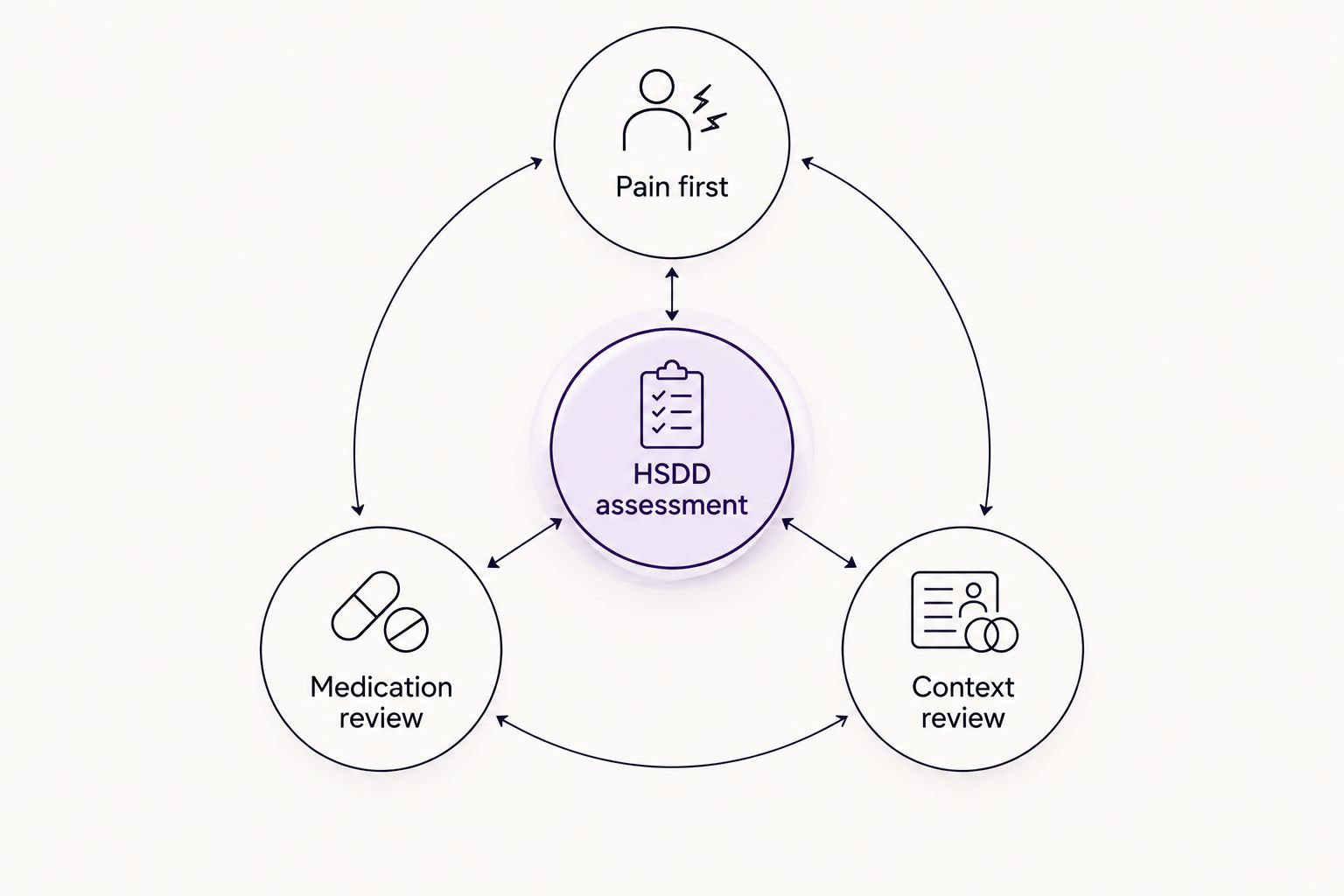
Start with the symptom that creates the biggest barrier. These are assessment routes, not instructions to diagnose yourself.
- Pain first: Report dryness, burning, bleeding, or pain with penetration.
- Medication review: Bring a complete list of prescriptions, supplements, and recent changes.
- Context review: Explain sleep, stress, mood, relationship concerns, and whether the problem occurs in every situation.
- HSDD assessment: Ask whether persistent low desire and distress fit a desire disorder after other causes are considered.
For a useful 2026 appointment, describe what changed and what improvement would mean to you. Comfortable sex, spontaneous interest, responsive desire, and less distress are related goals, but they are not identical.
Discuss your sexual health concerns
Directcare connects patients with licensed clinicians for sexual health care.
How the treatments are ranked
This 2026 ranking puts cause fit and safety ahead of convenience. It distinguishes established treatment indications from off-label care and gives each approach a separate use case.
The medication details follow FDA prescribing information for flibanserin and bremelanotide; the testosterone discussion follows the Global Consensus Position Statement's scope for women with HSDD. A treatment's place in this list does not establish that it is appropriate for you.
Which treatment should you choose?
Choose cause-directed assessment if you are undecided. Treat pain when pain is the barrier, review a medicine when symptoms track with its use, and consider HSDD-specific treatment only when the diagnosis and safety assessment support it.
In 2026, the useful question is not which treatment raises libido most. It is which treatment addresses your problem without adding avoidable risk.
FAQ
What's the best treatment for low libido in women?
The best treatment targets the cause of low desire. Pain, medication effects, stress, and HSDD require different approaches, so assessment comes before choosing a prescription.
Is vaginal estrogen better than a libido medication?
Vaginal estrogen is a better fit when menopause-related dryness or pain is the main problem. It treats those tissue symptoms, not HSDD itself.
Can testosterone help women with low libido?
Testosterone can help selected postmenopausal women with HSDD under clinical supervision. This use is off-label in the US and requires monitoring; a low blood result alone does not establish the diagnosis.
Is flibanserin an on-demand treatment?
No, flibanserin is taken daily rather than immediately before sex. Eligibility, alcohol instructions, liver health, and drug interactions need review before prescribing.
Who is bremelanotide for?
Bremelanotide is indicated for acquired, generalized HSDD in premenopausal women who meet its prescribing criteria. It is not appropriate for patients with uncontrolled hypertension or known cardiovascular disease.
Do I need hormone testing for low libido?
Not everyone with low libido needs hormone testing. A clinician chooses tests based on symptoms and medical history; hormone levels alone do not diagnose HSDD.
Should I stop my antidepressant if my libido drops?
Do not stop an antidepressant abruptly because of a libido change. Ask the prescriber to review the timeline and discuss options that protect both mental health and sexual function.
One last thing
Desire does not always come before arousal. Some women experience responsive desire: interest develops after welcome, comfortable intimacy begins rather than appearing spontaneously beforehand.
That pattern alone is not a disorder. You do not need treatment simply because your desire works differently from someone else's—and no treatment creates an obligation to have sex.