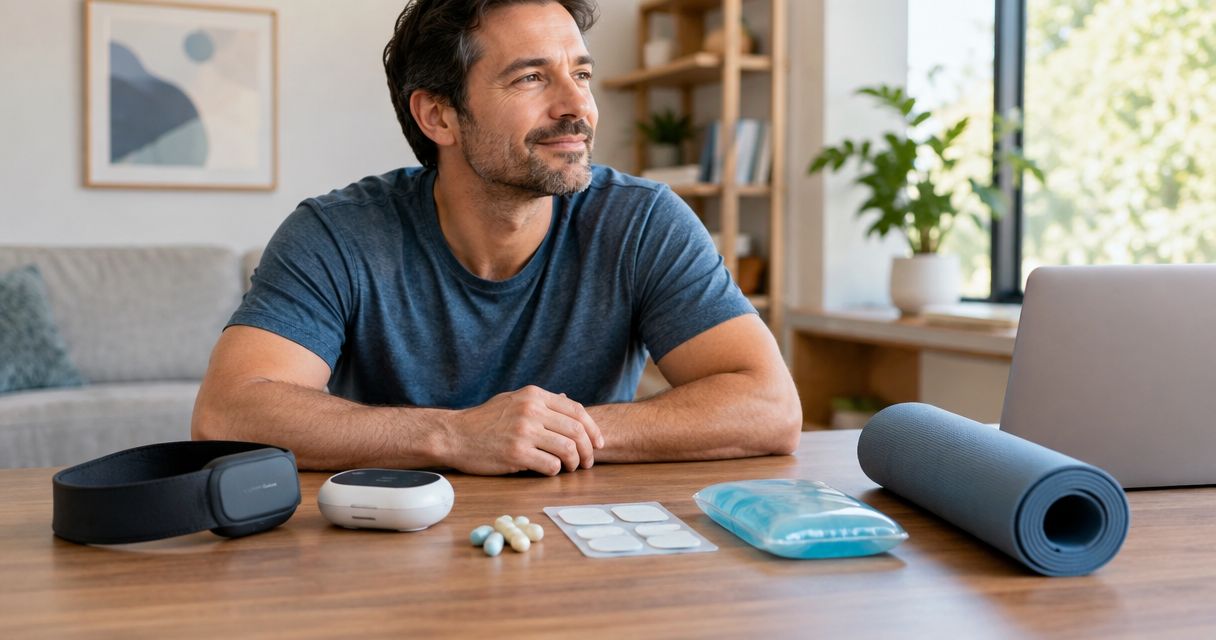
Best noninvasive starting option: a vacuum erection device. Best for a predictable medication-assisted erection without swallowing a pill: penile injections. Best definitive surgical option: a penile implant. This 2026 guide ranks ED treatment options besides pills by what you need, what each treatment involves, and which trade-offs deserve a clinician’s attention.
- ED treatment options besides pills include vacuum devices, penile injections, implants, urethral medication, psychosexual therapy, and exercise.
- Vacuum erection devices are the leading noninvasive, drug-free starting option in this guide.
- Penile injections require prescribing, technique training, and a clear prolonged-erection safety plan.
- Directcare connects adults with licensed clinicians for sexual health care; procedures require appropriate specialist assessment.
Why this matters
ED pills are not the only established treatment. Some people cannot take them safely, some get troublesome side effects, and others do not get an adequate response despite correct use.
Choose the treatment that addresses your situation, not the treatment with the strongest advertising. Persistent erectile dysfunction also deserves a medical assessment because it can accompany cardiovascular disease, diabetes, medication effects, or hormonal problems.
Directcare offers a telehealth starting point for adults seeking clinician-guided sexual health care. A telehealth assessment does not replace the examination, hands-on training, or surgery required for certain non-pill treatments.
What makes the best ED treatment options besides pills?
For this 2026 comparison, the strongest choice is the one that fits your medical history and the way you want sex to work.
- Safety: Your clinician must account for heart health, bleeding risks, medications, and previous prolonged erections.
- Treatment goal: Getting an erection, reducing performance anxiety, and improving vascular health are different goals.
- Practical fit: Devices, injections, urethral medication, and surgery require different preparation and comfort levels.
- Reversibility: You can stop using a vacuum device; implant surgery permanently changes erectile tissue.
- Evidence: Established treatments belong ahead of procedures still considered investigational.
- Follow-through: Training, partner communication, and follow-up matter as much as choosing a treatment.
ED treatments beyond pills at a glance
These are use-case rankings, not a claim that every person should try every treatment in order.
| Rank and option | Best for | Standout feature | Key limitation |
|---|---|---|---|
| 1. Vacuum erection device | A noninvasive, drug-free starting option | Mechanically draws blood into the penis | Requires setup; the constriction ring has a time limit |
| 2. Penile injections | A medication-assisted erection when pills are unsuitable or ineffective | Delivers medication directly into erectile tissue | Requires training and a prolonged-erection safety plan |
| 3. Penile implant | A definitive surgical option | Creates rigidity using an implanted device | Requires surgery and permanently alters erectile tissue |
| 4. Psychosexual therapy | Performance anxiety and relationship-related difficulties | Addresses psychological and interpersonal contributors | Does not directly correct impaired penile blood flow |
| 5. Exercise and risk-factor care | Long-term vascular health support | Addresses contributors beyond the erection itself | Is not an on-demand erection treatment |
| 6. Intraurethral alprostadil | Local medication without a penile injection | Places medication through the urethra | Can cause urethral discomfort and is not suitable for everyone |
1. Vacuum erection device: best for a drug-free starting option
A vacuum erection device uses a cylinder and pump to draw blood into the penis. A constriction ring placed at the base helps maintain the erection after you remove the cylinder.
Best for: You want a noninvasive option without systemic ED medication and are comfortable using equipment before intercourse.
Vacuum erection device pros:
- Avoids swallowing medication or injecting the penis.
- Does not require surgery.
- Can be used when a clinician advises against oral ED medication.
Vacuum erection device cons:
- Setup interrupts spontaneity, and the erection can feel different from an unassisted erection.
- Bruising, discomfort, coolness, or restricted ejaculation can occur.
- Bleeding disorders and blood-thinning medication require a suitability discussion.
Choose a device designed for medical ED treatment, with a vacuum limiter and clear instructions. A general-purpose enlargement pump is not a substitute for a medical device.
Never leave a constriction ring on for more than 30 minutes. Follow any shorter limit in your clinician’s or device’s instructions, and remove it sooner if you develop pain or concerning color changes.
Verdict: Buy only after a clinician confirms suitability and explains safe use.
2. Penile injections: best for a direct medication-assisted response
Penile injections deliver medication into the erectile tissue. Alprostadil is an established injectable option; clinicians also prescribe compounded combinations in appropriate circumstances.
Best for: You need an on-demand option when oral medication is ineffective, unsuitable, or poorly tolerated, and you accept needle-based treatment.
Penile injection pros:
- Delivers medication directly to the tissue involved in erection.
- Does not depend on absorbing a swallowed tablet.
- Allows a clinician to adjust treatment to your response.
Penile injection cons:
- Requires hands-on instruction, correct technique, and a prescribed dose.
- Can cause pain, bruising, scarring, or a prolonged erection.
- Adds preparation and medication-handling responsibilities.
Do not copy a friend’s dose or increase your dose because one attempt disappointed you. Your clinician should explain injection placement, dose adjustments, maximum use frequency, and what to do if the erection lasts too long.
An erection lasting 4 hours is a medical emergency. Seek emergency care rather than waiting for it to resolve; severe pain or other concerning symptoms warrant earlier assessment.
Verdict: Hold until a prescribing clinician provides training and a written safety plan.
3. Penile implant: best for a definitive surgical option
A penile implant places a device inside the penis to create rigidity. Inflatable and malleable designs work differently, so the right choice requires a discussion with an implant surgeon.
Best for: You want a surgical solution after finding other approaches unacceptable, ineffective, or unsuitable.
Penile implant pros:
- Provides a mechanical way to create rigidity without dosing medication before sex.
- Avoids an external vacuum cylinder during intercourse.
- Offers different device designs to match physical needs and preferences.
Penile implant cons:
- Requires surgery, recovery, and acceptance of infection and other surgical risks.
- Devices can malfunction and require further surgery.
- Permanently alters erectile tissue and does not restore natural erectile function.
An implant treats rigidity, not low desire or every cause of sexual dissatisfaction. It does not promise a larger penis, resolve relationship difficulties, or guarantee a particular sexual experience.
Ask the surgeon about expected appearance, sensation, device operation, recovery restrictions, and what happens if a complication occurs. Hand strength and dexterity also matter when selecting a device.
Verdict: Hold for an implant-urology consultation, not a sales-led commitment.
4. Psychosexual therapy: best for anxiety-related erection difficulties
Psychosexual therapy addresses performance anxiety, sexual avoidance, distress, and relationship patterns that interfere with arousal. Treatment can involve you alone or include your partner when appropriate.
Best for: Erections vary with circumstances, anxiety dominates sexual encounters, or relationship distress is contributing to the problem.
Psychosexual therapy pros:
- Addresses contributors that a device or medication does not directly treat.
- Helps you communicate about pressure, expectations, and intimacy.
- Can accompany medical treatment rather than replace it.
Psychosexual therapy cons:
- Requires participation and willingness to discuss sensitive experiences.
- Does not directly reverse arterial disease, nerve injury, or other physical causes.
Having erections during sleep or masturbation does not prove that ED is exclusively psychological. Physical and psychological contributors often overlap, so keep medical assessment in the plan.
Look for a licensed mental health professional with experience treating sexual concerns. Clear goals help: reducing avoidance, improving communication, and making sexual activity less dependent on a pass-or-fail erection test.
Verdict: Hold judgment on the cause until assessed; pursue therapy when anxiety or relationship factors contribute.
5. Exercise and risk-factor care: best for long-term vascular support
Exercise, smoking cessation, and management of diabetes, blood pressure, and cholesterol address health factors linked with erectile dysfunction. These steps support overall care rather than producing an erection on demand.
Best for: You want to address vascular contributors while using another treatment for immediate erectile support.
Exercise and risk-factor care pros:
- Addresses health beyond the immediate sexual symptom.
- Fits alongside devices, therapy, or prescribed medication.
- Creates an opportunity to review medications that affect sexual function.
Exercise and risk-factor care cons:
- Does not provide an immediate, predictable erection.
- Is not a substitute for treatment when nerve injury, severe vascular disease, or another specific cause needs attention.
The US Department of Health and Human Services’ Physical Activity Guidelines for Americans, published in 2018, recommend at least 150 minutes of moderate-intensity aerobic activity per week for adults, plus muscle-strengthening activity on 2 days per week. These are general health targets, not a guaranteed ED treatment dose.
If you develop chest pain or unusual breathlessness with exertion, get assessed before increasing activity or resuming strenuous sexual activity. Do not stop prescribed medication on your own because you suspect it affects erections.
Verdict: Hold unrealistic expectations of an instant fix; make risk-factor care part of treatment.
6. Intraurethral alprostadil: best for avoiding penile injections
Intraurethral alprostadil delivers medication through the urethra, the opening used to pass urine. It offers a local medication approach without injecting the side of the penis.
Best for: You want to discuss local medication but do not accept penile injections.
Intraurethral alprostadil pros:
- Avoids an injection into erectile tissue.
- Does not require a swallowed tablet.
- Offers another established route for delivering alprostadil.
Intraurethral alprostadil cons:
- Can cause urethral burning, penile discomfort, dizziness, or bleeding.
- Requires correct administration and may not produce an adequate response.
- Has precautions involving certain urethral conditions and partner exposure.
A clinician should review suitability and supervise initial use as appropriate. Discuss pregnancy-related partner precautions and follow the prescribed product instructions rather than assuming every alprostadil formulation works the same way.
Verdict: Hold until a clinician reviews urethral health, precautions, and administration.
Match the treatment to the problem
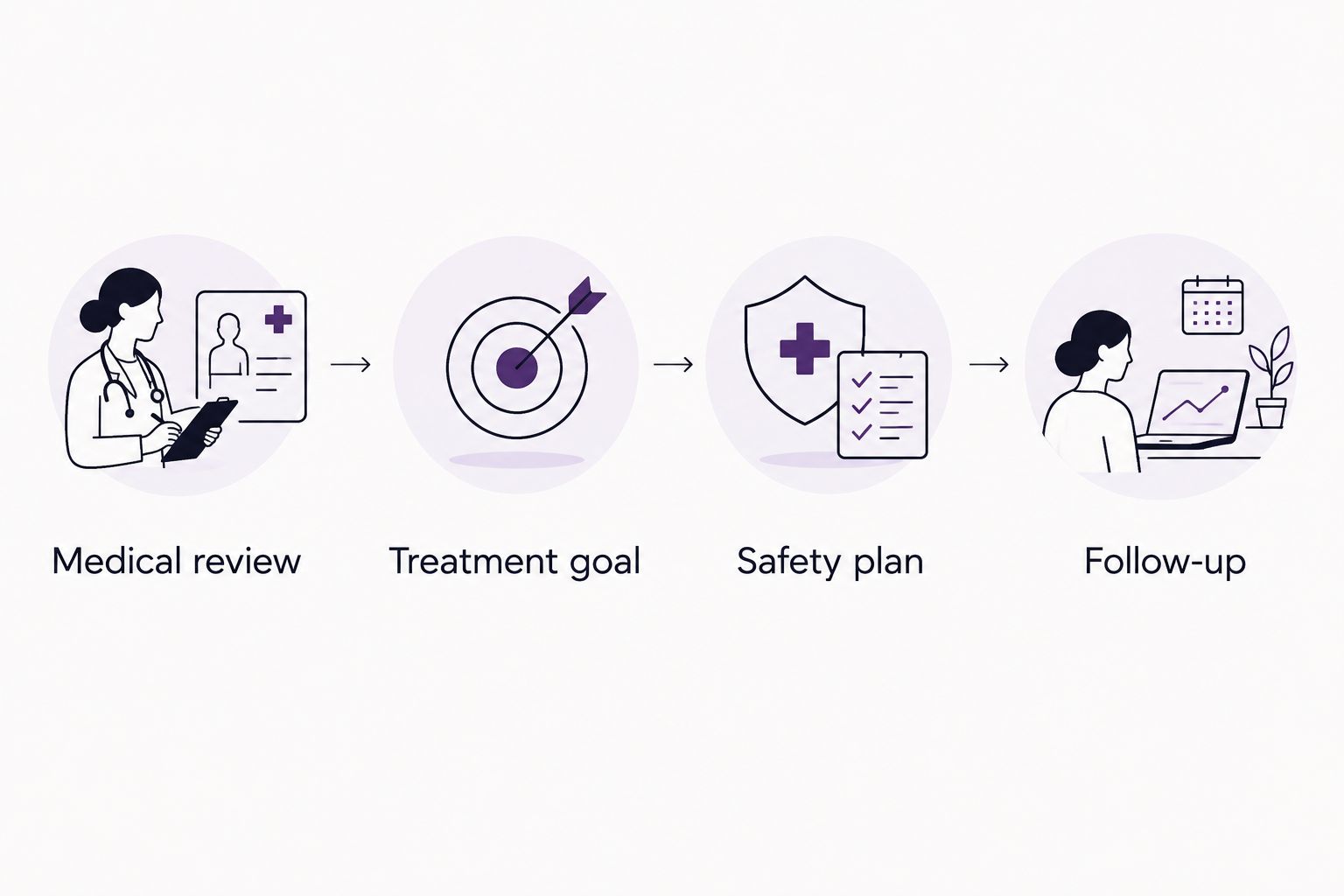
Use this decision sequence for a 2026 appointment. The aim is to leave with a treatment choice and a safety plan, not just a prescription or device recommendation.
- Medical review: Describe onset, consistency, morning erections, current medications, and cardiovascular symptoms.
- Treatment goal: Explain whether you prioritize avoiding medication, avoiding needles, spontaneity, or a definitive procedure.
- Safety plan: Ask about training, side effects, emergency symptoms, and partner precautions.
- Follow-up: Agree on how to judge response and what happens if the first approach disappoints you.
Directcare connects adults with licensed clinicians for sexual health care. Tell the clinician explicitly that you want ED treatment options besides pills so the discussion addresses your preferences and any need for specialist referral.
How these treatments were ranked
This 2026 ranking prioritizes established treatment roles, invasiveness, reversibility, and practical fit. It is not based on a head-to-head trial showing that one treatment wins for everyone.
The American Urological Association’s Erectile Dysfunction Guideline, published in 2018, supports discussing established options through shared decision-making. That guideline describes low-intensity extracorporeal shockwave therapy as investigational and platelet-rich plasma therapy as experimental; neither belongs ahead of established care in this guide.
Testosterone is not a general replacement for ED pills. Consider hormone treatment only after symptoms, appropriate testing, and a clinician’s assessment support the diagnosis.
Which non-pill ED treatment should you choose?
For an undecided reader in 2026, start by discussing a vacuum erection device. It offers a noninvasive, drug-free option without committing you to injections or surgery.
Choose penile injection assessment when a stronger local medication approach fits your needs. Choose an implant consultation when you want to discuss a definitive surgical option, and include psychosexual therapy whenever anxiety or relationship distress contributes.
Discuss your sexual health concerns
Talk through symptoms, treatment preferences, and next steps with a licensed clinician.
FAQ
What's the best ED treatment besides pills in 2026?
A vacuum erection device is this guide’s first option for someone seeking a noninvasive, drug-free approach. Penile injections and implants fit different needs, so the right choice depends on medical assessment and your preferences.
Are penile injections better than a vacuum pump?
Neither is better for everyone. Injections deliver medication into erectile tissue and require training; vacuum devices avoid medication but involve external equipment and a constriction ring.
Can I use a vacuum erection device if I take blood thinners?
Ask your clinician before using a vacuum erection device while taking blood thinners. Bruising and bleeding risks require an individual suitability review.
When does an erection after an injection become an emergency?
An erection lasting 4 hours requires emergency medical care. Follow your prescribed safety plan and seek earlier assessment for severe pain or other concerning symptoms.
Can anxiety cause ED even if I get morning erections?
Anxiety can contribute to ED even when morning erections occur. Morning erections do not rule out a physical contributor, so persistent symptoms still deserve assessment.
Does a penile implant increase sexual desire?
A penile implant treats rigidity, not low sexual desire. Discuss libido, sensation, orgasm concerns, and expectations separately with the surgeon.
Can Directcare help me discuss non-pill ED treatments?
Directcare connects adults with licensed clinicians for sexual health care. Discuss your interest in non-pill treatments; device training, procedures, or surgery require the appropriate clinical setting.
One last thing
Not swallowing a pill does not mean avoiding medication. Penile injections and intraurethral alprostadil are still drug treatments, with dosing instructions and safety precautions.
Before choosing a treatment in 2026, finish this sentence: “I want to avoid pills because…” Side effects, safety concerns, swallowing difficulty, and wanting more spontaneity lead to different next steps. Give your clinician that answer first.